
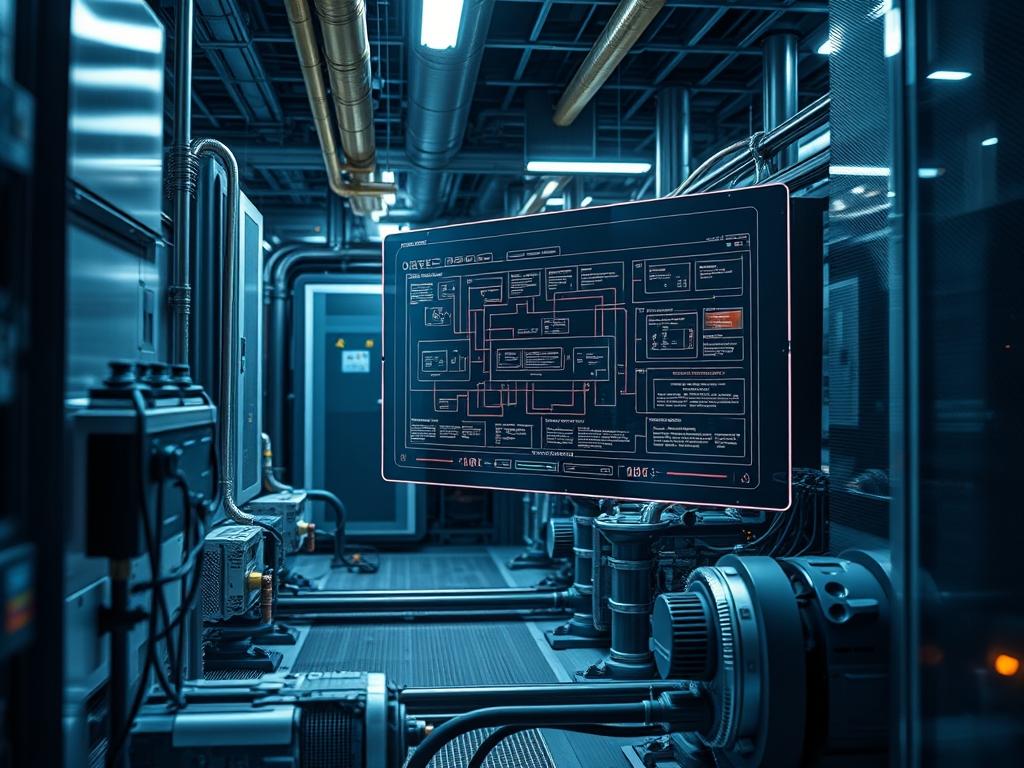
Passive Cooling Data Visualization serves as the critical intersection between thermodynamic reality and digital infrastructure management. In modern data centers and edge computing environments; heat dissipation relies increasingly on passive structures such as heat sinks; phase-change materials; and ambient airflow as opposed to energy-intensive active refrigeration. The effectiveness of these systems is non-obvious without a robust telemetry layer. Passive Cooling Data Visualization provides the necessary lens to observe thermal-inertia trends; identify micro-climates within server racks; and predict mechanical failure before terminal thresholds are reached. By integrating high-resolution sensor outputs into time-series databases; architects can map the relationship between computational throughput and heat dissipation rates. This visibility is essential for optimizing the Power Usage Effectiveness (PUE) ratio and ensuring that the physical environment supports the logical load without introducing latency-inducing thermal throttling. This manual outlines the architecture required to capture; process; and visualize these critical datasets across diverse infrastructure footprints.
Technical Specifications
| Requirement | Default Port/Operating Range | Protocol/Standard | Impact Level (1-10) | Recommended Resources |
| :— | :— | :— | :— | :— |
| Telemetry Exporter | 9100 (Node Exporter) | TCP/IP HTTP | 8 | 1 vCPU / 512MB RAM |
| Thermal Sensors | -40C to +125C | I2C / SMBus | 10 | DS18B20 or TMP117 |
| Time Series DB | 9090 | Prometheus / TSDB | 9 | 2 vCPU / 4GB RAM |
| Visualization Layer | 3000 | Grafana / Dashboard | 7 | 1 vCPU / 2GB RAM |
| Data Standard | N/A | ASHRAE TC 9.9 | 6 | N/A |
| Network Latency | < 50ms | ICMP / UDP | 5 | Cat6a Shielded |
The Configuration Protocol
Environment Prerequisites:
Successful implementation requires a Linux-based environment running Kernel 5.4 or higher to ensure compatibility with modern LM-Sensors drivers. Users must possess sudo or root administrative privileges to interact with hardware buses. Essential software includes Python 3.10+; Prometheus 2.45+; and Grafana 10.x. Minimum hardware requirements involve a motherboard with an integrated IPMI (Intelligent Platform Management Interface) or an external microcontroller connected via USB or GPIO for environmental data ingestion. All physical cabling must adhere to TIA-568-C standards to prevent electromagnetic interference from skewing sensor readings.
Section A: Implementation Logic:
The technical foundation of Passive Cooling Data Visualization rests on the concept of encapsulation. Thermal data points are captured as raw voltage or resistance values; then encapsulated into digital payloads for transport across the network. The logic is inherently idempotent: requesting a sensor reading should not alter the state of the cooling stack itself. We focus on thermal-inertia; the rate at which a system resists temperature change. By visualizing this inertia; we can calculate the overhead of current cooling configurations. If the payload indicates a rapid increase in temperature despite a steady throughput; we identify a breakdown in the passive airflow cycle. This predictive modeling allows for infrastructure hardening by preemptively adjusting workload distribution to cooler nodes.
Step-By-Step Execution
1. Initialize Hardware Interface
Execute the command sudo sensors-detect to scan all available I2C; SMBus; and ISA adapters for thermal monitoring chips.
System Note: This action triggers a kernel-level probe of the physical hardware bus. It loads the necessary kernel modules (such as coretemp or it87) into the running system state; allowing the OS to map physical heat signatures to logical file descriptors in /sys/class/hwmon/.
2. Configure Node Exporter Textfile Collector
Navigate to /etc/default/node_exporter and append the flag –collector.textfile.directory=”/var/lib/node_exporter/textfile_collector”.
System Note: This configures the telemetry agent to ingest custom metrics beyond standard CPU and RAM stats. By pointing to a specific directory; we allow external scripts (which may be polling specialized thermal probes via linux-multimeter tools) to inject thermal-inertia data into the Prometheus stream without restarting the service.
3. Deploy Thermal Polling Script
Create a script at /usr/local/bin/thermal_poll.py that reads from the hardware path /sys/class/hwmon/hwmon0/temp1_input.
System Note: This script acts as the middleware between the raw hardware layer and the visualization stack. It handles the unit conversion from millidegrees Celsius to standard units; ensuring that data remains consistent across the entire cluster.
4. Establish Systemd Persistence
Run systemctl enable –now node_exporter.service followed by systemctl status node_exporter.
System Note: This ensures the monitoring daemon persists across system reboots. The systemctl tool manages the lifecycle of the telemetry process; ensuring it remains as a background service with appropriate resource isolation.
5. Finalize Visualization Dashboard
Access the Grafana web interface and import the dashboard template via JSON payload. Ensure the data source points to the Prometheus instance at http://localhost:9090.
System Note: This step transforms raw time-series data into a spatial heat map. It utilizes the GPU or CPU of the client machine to render visual gradients representing thermal distribution; allowing for real-time auditing of passive cooling effectiveness.
Section B: Dependency Fault-Lines:
The most frequent point of failure in this stack is signal-attenuation within the physical sensor wiring. If I2C cables exceed a specific length without active repetition; the data packets will experience corruption. This results in “ghost” readings or “NaN” (Not a Number) errors in the visualization layer. Another common bottleneck is the disk I/O overhead on the Prometheus server. If the scrape interval is set too high (e.g.; every 100ms); the resulting concurrency of write operations can lead to significant latency in dashboard updates. Finally; check for driver conflicts where the ACPI subsystem and the LM-Sensors module compete for access to the same hardware registers; often resulting in a system freeze or kernel panic.
THE TROUBLESHOOTING MATRIX
Section C: Logs & Debugging:
When the visualization dashboard fails to plate data correctly; the first point of audit is the system journal. Use journalctl -u node_exporter -n 50 to inspect the last fifty lines of the service log. Look for strings such as “permission denied” or “no such file or directory” indicating that the service cannot access the /sys/class/hwmon node. If the hardware is not detected; use lsmod | grep hwmon to verify the driver is loaded.
Physical fault codes are often indicated by a “Check-Sum Error” on the sensor bus. Inspect the output of dmesg | grep i2c to identify timing issues or packet-loss on the serial interface. If the dashboard shows a flat line despite a varying computational load; check the script permissions using ls -l /usr/local/bin/thermal_poll.py; ensuring that the execution bit is set via chmod +x. For network-related issues; use tcpdump -i eth0 port 9100 to verify that the metrics payload is actually leaving the source machine and reaching the aggregator.
OPTIMIZATION & HARDENING
Performance Tuning: To improve efficiency; implement a staggered scrape interval. Instead of polling every sensor at the same millisecond; offset the collectors to reduce instantaneous CPU spikes. Use Prometheus recording rules to pre-calculate the thermal-inertia delta before the data reaches the visualization layer. This reduces the computational load on the dashboard during heavy traffic.
Security Hardening: Restrict the telemetry ports to internal networks only using iptables or firewalld. Run the command firewall-cmd –permanent –add-rich-rule=’rule family=”ipv4″ source address=”10.0.0.5″ port protocol=”tcp” port=”9100″ accept’ to ensure only the management server can scrape the data. Furthermore; ensure the polling scripts run as a non-privileged user to limit the blast radius of potential exploits.
Scaling Logic: As the infrastructure expands; move from a centralized Prometheus instance to a federated model. In this setup; localized “Edge” collectors aggregate data from a single rack and push a compressed payload to the central visualization hub. This minimizes the bandwidth overhead and prevents network congestion during high-concurrency events.
THE ADMIN DESK
How do I recalibrate a sensor via software?
Adjust the offset variable within the thermal_poll.py script. Subtract or add the known variance (found via fluke-multimeter testing) to the raw value before it is pushed to the collector. This ensures the dashboard remains accurate.
Why is my dashboard showing 0 degrees?
This usually indicates a failure in the hardware-to-logic mapping. Verify that the file path in /sys/class/hwmon/ has not changed after a kernel update. Check dmesg for any hardware disconnection events or power-cycling of the sensor hub.
Can I monitor passive cooling effectiveness without external sensors?
Yes; by utilizing internal on-die thermal sensors via IPMI. However; internal sensors do not account for ambient airflow or rack-level micro-climates; making them less effective for holistic Passive Cooling Data Visualization.
What is the maximum safe scrape interval?
For passive cooling; a scrape interval of 10 to 15 seconds is usually sufficient. Because thermal-inertia changes slowly compared to network traffic; higher frequency polling creates unnecessary overhead without providing additional actionable intelligence for the architect.