
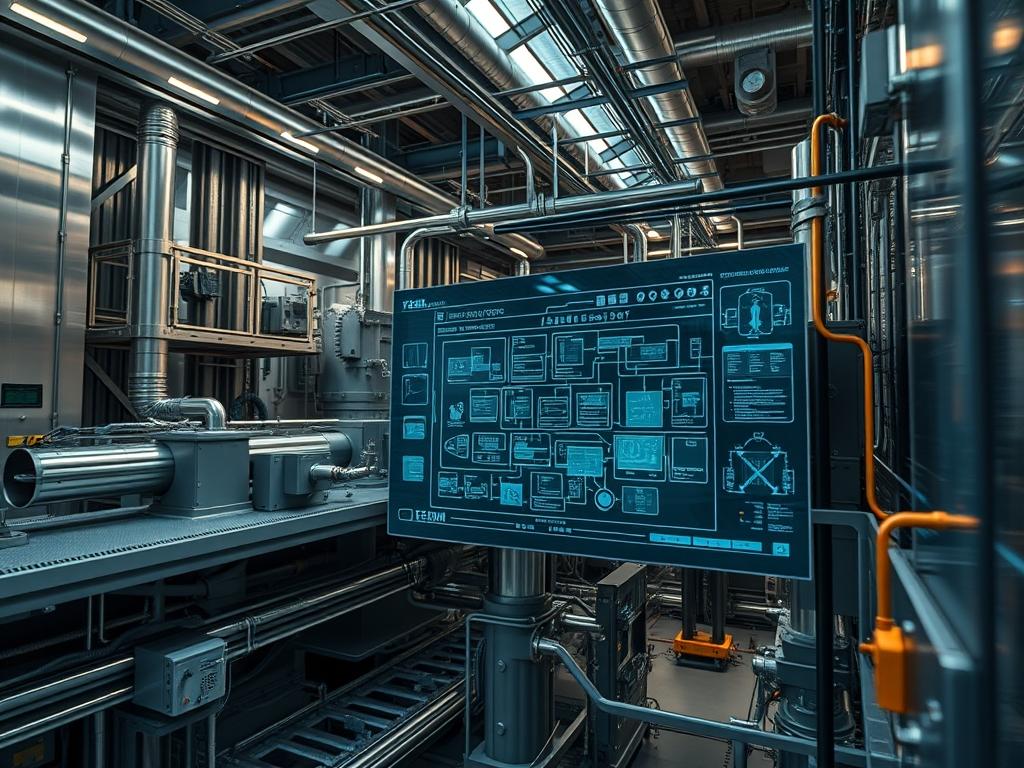
Building Envelope Maintenance represents the physical encapsulation layer of the modern infrastructure stack. Similar to how a packet header protects its payload during transmission, the building envelope serves as the critical interface between internal climate-controlled environments and external atmospheric variables. Failure to maintain this envelope results in increased thermal-inertia and significant overhead for mechanical systems. In high-density data centers or critical industrial facilities, the envelope is the primary hardware firewall against moisture ingress and thermal leakage. This technical manual outlines the idempotent processes required to ensure the structural integrity and energy efficiency of the building skin. By treating every facade component as a discrete service with defined uptime requirements, architects and facility managers can minimize the latency of environmental responses and optimize the throughput of building management systems (BMS). The solution focuses on scheduled calibration of sensor arrays, structural inspections, and material integrity audits to prevent cascading system failures within the broader utility infrastructure.
TECHNICAL SPECIFICATIONS
| Requirement | Default Operating Range | Protocol/Standard | Impact Level | Recommended Resources |
| :— | :— | :— | :— | :— |
| Air Barrier Leakage | < 0.20 L/(s·m²) | ASTM E2178 | 9 | High-Density HDPE Membranes |
| Thermal Resistance | R-Value 20 to R-Value 50 | ASHRAE 90.1 | 8 | Mineral Wool / Polyisocyanurate |
| Structural Torque | 15 to 85 lb-ft | AISC 360 | 10 | CDI-Digital-Torque-Wrench |
| Sensor Latency | < 500ms | BACnet/IP | 6 | ARM-Cortex-M4 Gateway |
| Moisture Content | < 15% MC | ASTM D4444 | 7 | Delmhorst-BD-2100 |
| Sealant Elasticity | 25% to 50% Movement | ASTM C920 | 5 | Silicone/Polyurethane Class 25 |
THE CONFIGURATION PROTOCOL
Environment Prerequisites:
1. Access Controls: Execution requires Level-3-Security-Clearance for mechanical rooms and root-level access to the BMS-Control-Panel.
2. Standards Compliance: All procedures must align with NEC Article 725 for low-voltage cabling and ISO 9001 for quality management.
3. Hardware: Calibrated FLIR-T1K-Thermal-Camera, ultrasonic thickness gauges, and a ruggedized mobile terminal running Ubuntu-Server-22.04-LTS for local log ingestion.
4. Material Staging: Ensure all replacement sealants and membranes are stored in a climate-controlled environment to prevent premature curing or degradation of the chemical payload.
Section A: Implementation Logic:
The logic of Scheduled Service for Long Term Building Envelope Maintenance is rooted in the principle of preventative encapsulation. Every building exists in a state of high entropy; external forces such as UV radiation, wind loading, and moisture cycles act as persistent “denial-of-service” attacks against the structural core. Implementation logic dictates that we treat the envelope as a series of nested loops. The outermost loop (The Rain Screen) handles the high-volume payload of precipitation. The middle loop (The Air/Vapor Barrier) manages the throughput of gaseous particles. The innermost loop (The Insulation Layer) governs the thermal-inertia of the system. By maintaining these layers through idempotent inspection routines, we reduce the computational and mechanical load on the HVAC system, ensuring that the internal environment remains stable despite external volatility.
Step-By-Step Execution
1. Perform Multi-Spectral Thermal Audit
Execute a full-scale scan using the FLIR-T1K at a minimum resolution of 1024×768. Focus on joints, penetrations, and glazing perimeters where thermal-bridging is most likely to occur.
System Note: This action identifies areas of heat-packet-loss where the thermal-inertia of the building is compromised; it allows the BMS to adjust set-points to compensate for envelope “leaks” before they impact the core kernel of the cooling system.
2. Verify Air Barrier Continuity via Pressure Testing
Initiate a localized depressurization test using a Retrotec-3000-Blower-Door. Monitor the flow rates to ensure they remain within the parameters of the ASTM-E779 standard.
System Note: Similar to checking for packet-loss in a network stream, this step ensures the airtightness of the building shell. High leakage rates increase the overhead of the pressurized mechanical system, potentially leading to the failure of HVAC-Inverter-Drives.
3. Calibrate Environmental Sensor Arrays
Connect to the local gateway using ssh admin@bms-gateway-01.local. Run the command systemctl restart sensor-polling-service and compare the digital readout with physical measurements from a Sling-Psychrometer.
System Note: This synchronizes the physical reality of the building envelope with the digital twin in the BMS. Correcting sensor-offset prevents the software from making erroneous decisions regarding energy distribution.
4. Inspect Sealant Bead Integrity and Adhesion
Physically probe expansion joints using a Shore-A-Durometer to measure hardness. Navigate to the maintenance log at /var/log/envelope/joints.log to record any deviations from the baseline elasticity.
System Note: This is a physical “buffer-overflow” check. If the sealant has hardened beyond its specification, it can no longer absorb the kinetic payload of building expansion, leading to structural cracks.
5. Torque Audit of Structural Facade Fasteners
Using the CDI-Digital-Torque-Wrench, sample 5 percent of all exposed facade anchors. Ensure they meet the specific tension requirements defined in the original CAD-BIM-Specifications.
System Note: This ensures the physical stability of the “chassis” of the building. Loose fasteners create signal-attenuation in the structural integrity monitoring system, which can trigger false alarms in the seismic sensor array.
Section B: Dependency Fault-Lines:
Maintenance failure usually stems from “library conflicts” between incompatible materials. For example, applying a silicone sealant over a previous polyurethane bead without proper mechanical debridement will result in a failure of adhesion—a state where the two physical objects cannot “handshake” correctly. Another bottleneck is the latency in sensor reporting. If the RS-485 bus becomes noisy due to electromagnetic interference from high-voltage cables, the BMS may receive corrupted telemetry, leading it to over-cool a zone that is already at its set-point. Lastly, thermal-inertia is a major dependency; large concrete structures do not respond instantly to mechanical changes, and ignoring this lag in the maintenance logic can lead to oscillatory behavior in the climate control system.
THE TROUBLESHOOTING MATRIX
Section C: Logs & Debugging:
When a fault occurs, the first point of contact is the Building-Event-Logger. Error strings such as “ERR_MOISTURE_EXCEEDED” or “FAULT_THERMAL_BRIDGE_DETECTED” provide immediate pointers to physical failures.
– Log Path: /var/log/bms/envelope-telemetry.log
– Symptom: Unexplained rise in energy consumption.
– Visual Cue: Look for condensation patterns on glazing; this indicates a failure in the desiccant layer or a breach in the argon-gas-payload within the IGUs (Insulated Glass Units).
– Physical Code: FC-402 (Facade Leakage). Check the flashing details at the roof-to-wall interface. Verify that the weep-holes are not obstructed by debris, as this causes a “backlog” of moisture behind the rain screen.
– Sensor Reset: If the moisture sensor provides a “NaN” or “0.00” reading, check the wiring at the Analog-input-terminal-04. Use a Fluke-Multimeter to verify the 4-20mA loop integrity.
OPTIMIZATION & HARDENING
– Performance Tuning: To optimize the thermal efficiency of the building envelope, implement a predictive maintenance algorithm that correlates weather forecast data with current envelope performance. This reduces the latency of the HVAC response times. By adjusting the thermal-inertia parameters in the BMS logic-controller, you can “pre-cool” the building mass during off-peak hours based on the envelope’s known insulation capacity.
– Security Hardening: Physical security of the envelope is critical. Ensure all BMS sensors located on the facade are behind a dedicated firewall and use encrypted protocols like BACnet/SC. Physically “harden” the envelope by installing high-impact glazing and tamper-proof fasteners on all exterior-mounted hardware to prevent unauthorized physical access to the building’s internal network through external sensor ports.
– Scaling Logic: As the facility expands (e.g., adding a new wing or “module”), the scaling of the envelope maintenance requires a modular approach. Each new section of the facade should be treated as a new “node” in the maintenance cluster. Use a hierarchical configuration where local PLC-Units handle the immediate sensor data and report an aggregated “health-status” to the central administrator desk. This prevents the central BMS processor from being overwhelmed by high-traffic sensor data as the physical footprint grows.
THE ADMIN DESK
Q: How do we handle “deprecated” sealant materials?
A: If a material reaches its EOL (End-of-Life), it must be fully stripped. Do not attempt a “hot-fix” by layering new material over old. This creates a legacy conflict that results in total adhesion failure within one seasonal cycle.
Q: What is the cause of “Signal-Attenuation” in moisture sensors?
A: This is often caused by mineral deposits or “salting” on the sensor probe. It acts as a physical resistor, skewing the resistance-based moisture readout. Clean the probe with an isopropyl-alcohol-solution to restore the original data throughput.
Q: Why is thermal-inertia important for maintenance scheduling?
A: Thermal-inertia dictates the “cooldown” period of the building. Maintenance should be scheduled when the delta between internal and external temperatures is at its lowest to minimize the thermal-shock to the building’s mechanical services during the inspection.
Q: How often should we check the “idempotency” of automated louvers?
A: Louvers should be cycled through their full range of motion every 90 days. This ensures that the actuator motors haven’t developed “stickiness” or mechanical latency that would prevent them from responding to a high-priority environmental event.
Q: Can we ignore small cracks in the masonry encapsulation?
A: No. Small cracks act as “exploits” for moisture. Once a crack exists, the freeze-thaw cycle will expand it, leading to a “buffer-overflow” of water into the structural assembly, resulting in critical hardware damage to the internal framing.