
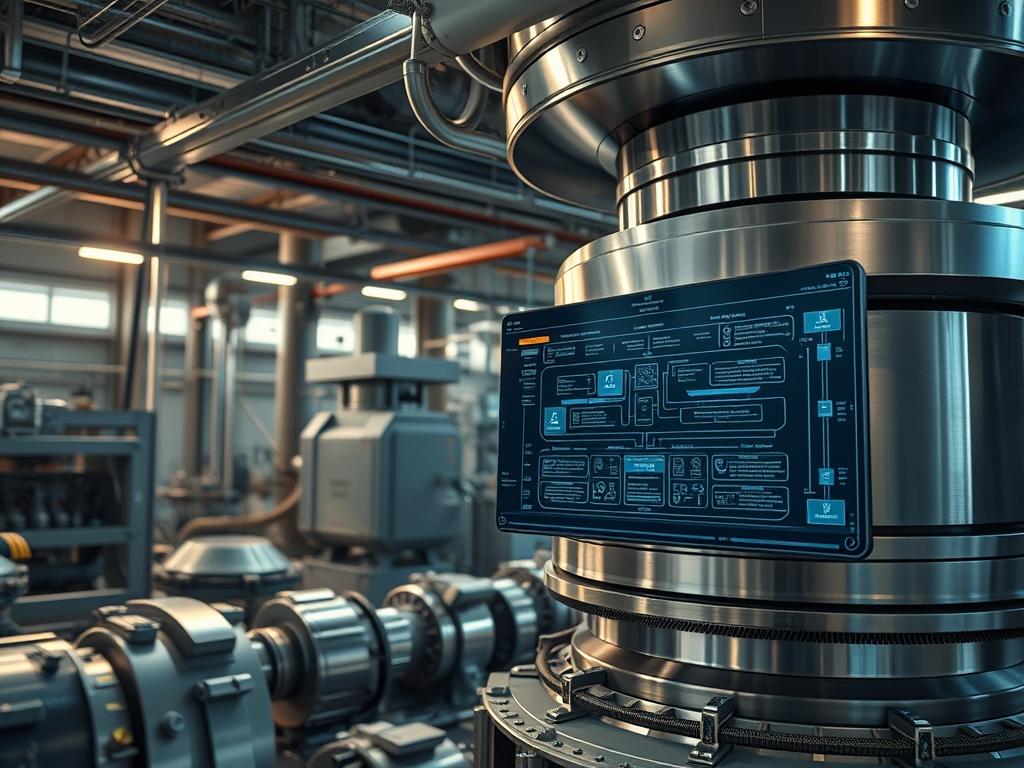
Aeronautical acoustics, or aero-acoustics, in the context of Air Source Heat Pump (ASHP) systems dictates the mechanical efficiency and environmental impact of distributed thermal energy infrastructure. As residential and commercial grids shift toward carbon-neutral heating, the acoustic signature of high-volume airflow across exterior heat exchangers has become a critical bottleneck for deployment in high-density urban zones. ASHP Fan Blade Aero-Acoustics focuses on the minimization of sound power levels (LwA) without sacrificing the static pressure required to maintain optimal thermal throughput across the evaporator coil. This manual addresses the engineering nexus where fluid dynamics meet structural vibration; it treats the fan blade assembly as a critical physical asset within the broader energy stack. By optimizing the blade geometry, specifically the leading-edge profile and trailing-edge serrations, engineers can significantly reduce turbulence-induced noise. This reduction mitigates the “payload” of acoustic energy that would otherwise lead to site-rejection or regulatory non-compliance. The following protocols outline the transition from computational fluid dynamics (CFD) modeling to physical hardware deployment.
Technical Specifications
| Requirement | Operating Range / Default | Protocol / Standard | Impact Level (1-10) | Recommended Resources |
| :— | :— | :— | :— | :— |
| Acoustic Output | 35 to 58 dB(A) | ISO 3744 / ISO 9614 | 10 | 16-Core CPU / 64GB RAM |
| Rotational Speed | 300 to 950 RPM | IEC 60335-2-40 | 8 | PWM Logic Controller |
| Blade Tip Speed | < 60 m/s | ISO 1940 (G6.3) | 9 | Glass-Fiber Polymer |
| Static Pressure | 25 to 110 Pa | AMCA 210 | 7 | CFD Solver (OpenFOAM) |
| Operating Temp | -25C to +50C | ASHRAE 189.1 | 6 | Thermal-Inertia Testing |
The Configuration Protocol
Environment Prerequisites:
1. Simulation Engine: OpenFOAM v2312 or ANSYS Fluent localized on a High-Performance Computing (HPC) cluster.
2. Physical Hardware: ASHP-Fan-Controller-V4 with RS-485 or Modbus communication capabilities.
3. Design Standards: Adherence to ISO 5801 for fan performance and IEEE 112 for motor efficiency.
4. User Permissions: Root or Sudo access to the simulation kernel and Admin level access to the Programmable Logic Controller (PLC).
Section A: Implementation Logic:
The primary cause of noise in ASHP systems is the formation of turbulent eddies at the fan blade tips and the subsequent vortex shedding at the trailing edge. This phenomenon increases “overhead” in the form of wasted kinetic energy. The engineering goal is to maintain laminar flow across as much of the blade surface as possible, ensuring that the air-to-refrigerant heat transfer remains high while minimizing sound power. By applying bionic patterns, such as serrated edges that mimic owl feathers, we can break up large-scale vortex structures into smaller, higher-frequency components that are less audible to the human ear. This method provides an idempotent result in various environmental conditions; once the blade geometry is optimized for a specific Reynolds number range, the acoustic profile remains stable across the operational spectrum.
Step-By-Step Execution
Provisioning the Computational Domain
To begin the design, initialize the simulation environment on the HPC cluster. Execute the command mkdir -p /simulations/ashp_fan_v1/constant to establish the directory structure. Define the mesh density in the blockMeshDict file, ensuring that the boundary layer around the blade tips has a y+ value of less than 1. This ensures that the simulation captures near-wall turbulence accurately.
System Note: This action reserves specific memory blocks in the system kernel to handle the high density of tetrahedral cells required for acoustic modeling. Ensuring low latency in data processing between nodes is essential for solver convergence.
Executing the Geometry Mock-Up
Load the 3D geometry file (fan_blade_geometry.stl) into the pre-processor. Use snappyHexMesh to refine the grid around the leading-edge radius and the trailing-edge serrations. Verify that the blade pitch angle is set to 22.5 degrees for optimal pressure-to-noise ratio.
System Note: The mesh generation process is heavy on CPU throughput; it defines the spatial coordinates for the Navier-Stokes equations. Improper mesh refinement leads to numerical diffusion, which masks the very acoustic transients we aim to eliminate.
Running the Fluid-Structure Interaction (FSI) Solver
Initiate the solver using the command mpirun -np 16 simpleFoam -parallel. This command distributes the computational load across 16 cores. Monitor the residuals to ensure that the pressure-velocity coupling stabilizes below a 1e-05 threshold.
System Note: The solver evaluates the throughput of air (CFM) versus the resistance of the evaporator coil. If the solver diverges, check the boundaryConditions file in the /0/ directory for incorrect phi values.
Calibration of the Physical Prototype
Once the digital twin shows a 5dB reduction, manufacture the physical prototype using Injection Molded Glass-Fiber Reinforced Polymer. Mount the fan on the ASHP-Chassis-Alpha and connect the Fluke-810-Vibration-Tester to the motor housing. Use the sensors command to monitor thermal readings and RPM.
System Note: This step verifies the thermal-inertia of the material. Excess vibration indicates structural resonance, which functions like a hardware bug; it must be addressed by adjusting the internal ribbing of the blade.
Section B: Dependency Fault-Lines:
A significant bottleneck in ASHP performance is the conflict between “low noise” and “high static pressure.” If the fan blade is too swept back to reduce noise, the system may suffer from insufficient airflow across the evaporator, leading to a drop in the Coefficient of Performance (COP). This is a classic case of signal-attenuation where the “signal” is the thermal energy transfer. Additionally, if the motor’s PWM frequency is not synchronized with the fan’s blade-pass frequency, an audible “beat” or heterodyne noise may occur. This requires a firmware-level fix in the Inverter-Drive-Logic.
The Troubleshooting Matrix
Section C: Logs & Debugging:
When diagnosing noise issues in the field, technicians should first access the error-log.txt via the ASHP-Main-Controller. Specific codes indicate the source of the failure.
- Error Code E-042: Indicates airflow throughput is below the 80% threshold. Path: logs/airflow/sensor_01. Solution: Inspect the leading edge for debris buildup or ice formation that disrupts laminar flow.
- Error Code E-099: High mechanical resonance detected. Path: logs/vibration/accelerometer_01. Solution: Use a fluke-multimeter to check for voltage imbalance in the ECM Motor phases; recalibrate the PID loop to avoid the resonant RPM frequency.
- Log Entry – “Turbulence Intensity > 15%”: This log in the simulation environment suggests that the mesh at the blade tip is too coarse. Resolution: Update the snappyHexMeshDict to increase refinement levels from 3 to 5 in the RefinementBox.
Physical visual cues are also vital. If the trailing edge of the blade shows signs of “scuffing” or wear, it indicates high-velocity vortex shedding that is literally eroding the material. This is a physical manifestation of high overhead and must be corrected by smoothing the chord transition.
Optimization & Hardening
- Performance Tuning: Integrating Variable Speed Drives (VSD) allows the fan to operate at a lower RPM during night hours when ambient temperatures drop. This reduces the payload on the local electrical grid and satisfies local noise ordinances. Tuning the ramp-up and ramp-down speeds via the systemctl restart ashp-fan-service ensures that the motor avoids sudden torque spikes that generate transient noise.
- Security Hardening: Ensure the PLC governing the fan speed is protected behind a Firewall if it is connected to a building management system (BMS). Use chmod 700 /etc/ashp/control_logic to prevent unauthorized access to the speed-profile parameters. Physically, use tamper-proof bolts on the fan shroud to prevent mechanical interference.
- Scaling Logic: When deploying arrays of ASHPs in a “cloud” of thermal assets; such as a district heating network; synchronize the fan phases. If multiple fans rotate in a way that their acoustic peaks overlap, the resulting constructive interference increases noise levels by up to 6dB. Hardcode a latency offset in the start-up sequence of individual units to ensure concurrency does not lead to acoustic overload.
The Admin Desk
How do I reduce blade-pass frequency noise?
Increase the number of blades from 3 to 5 while decreasing the RPM. This shifts the dominant frequency to a higher, more easily attenuated band. Use the ASHP-Config-Tool to update the motor profile for lower rotational speeds.
What material grade is best for acoustic dampening?
Choose a composite with high internal damping, such as a mineral-filled polypropylene. This reduces the thermal-inertia and structural vibration. Verify the material’s elastic modulus meets ASTM D790 standards before mass production.
Why is my CFD solver failing at high RPM?
This is typically caused by a high CFL (Courant-Friedrichs-Lewy) number. Reduce the simulation time step in the controlDict file to ensure the air “packet” does not skip over a mesh cell.
Can serrated edges decrease overall efficiency?
If designed incorrectly, they increase skin-friction overhead. However, a well-parameterized trailing-edge serration (TES) recovers efficiency by reducing base pressure drag. Use an idempotent design workflow to ensure consistent results across all blade sizes.
How do I verify the acoustic reduction in the field?
Utilize a calibrated Class 1 sound level meter. Map the sound pressure levels (Lp) at five points around the unit. Cross-reference these readings with the sensor-output.log to correlate noise with specific motor frequencies and airflow volumes.