
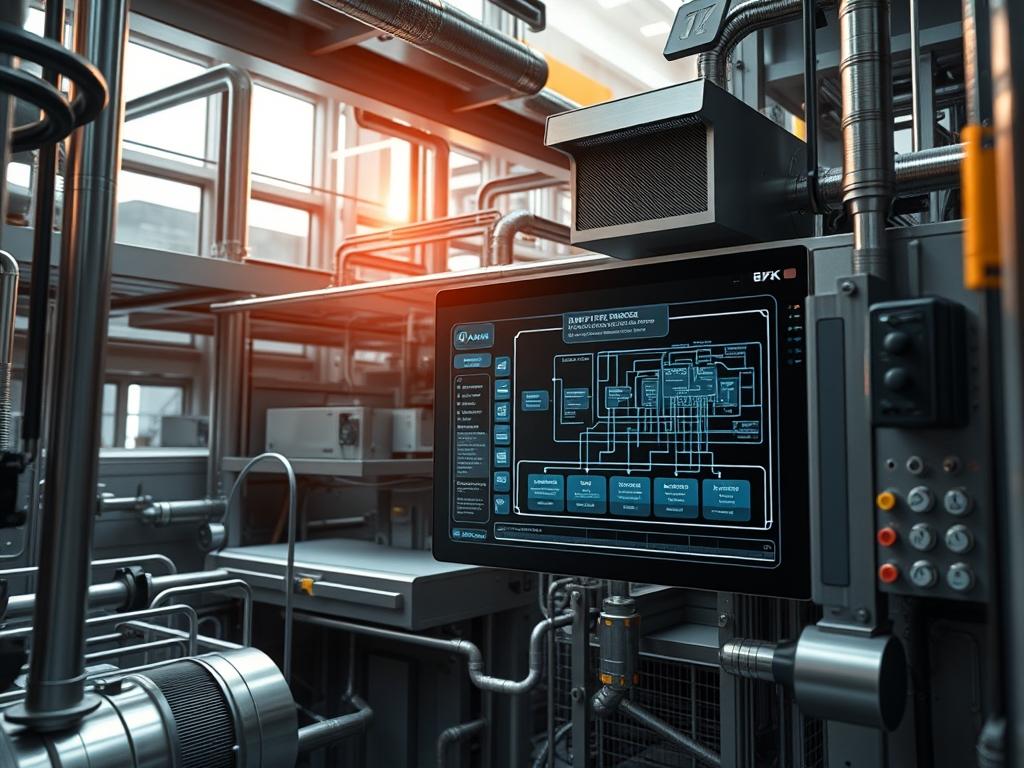
MERV Filter Rating Selection represents a critical optimization point within modern facility management and data center infrastructure. The core technical challenge involves balancing the removal of airborne particulate matter against the parasitic energy loss caused by increased static pressure. In high density environments; such as cleanrooms or high performance computing (HPC) clusters; the MERV Filter Rating Selection dictates the throughput of clean air and the thermal inertia of the cooling loop. High efficiency filters; while narrowing the aperture for contaminants; introduce significant resistance that can lead to motor strain or reduced airflow velocity. This manual treats the filter media as a physical firewall; where the “payload” is clean air and the “overhead” is the pressure drop across the media. Failure to calibrate this selection correctly results in system-wide latency in cooling response; leading to thermal throttling of hardware or premature failure of air handling components.
Technical Specifications
| Requirements | Default Port/Operating Range | Protocol/Standard | Impact Level (1-10) | Recommended Resources |
| :— | :— | :— | :— | :— |
| Particle Capture (0.3um) | MERV 13 to 16 | ASHRAE 52.2 | 9 | High-Static Plenums |
| Delta-P Monitoring | 0.1 to 2.0 inches w.g. | Modbus/BACnet | 8 | Differential Sensors |
| Face Velocity (FPM) | 250 to 500 FPM | ISO 16890 | 7 | VFD-driven AHUs |
| Energy Consumption | 20% to 45% Fan Load | IEEE 519 | 10 | 3-Phase Power |
| Gasket Sealing | 0.0% Bypass Leakage | SMACNA Standards | 6 | Closed-cell Neoprene |
The Configuration Protocol
Environment Prerequisites:
Implementation requires strict adherence to ASHRAE Standard 52.2 for efficiency testing and ASHRAE 62.1 for ventilation rates. The infrastructure must support Modbus TCP/IP or BACnet/IP for real-time sensor feedback. Hardware dependencies include a variable frequency drive (VFD) capable of adjusting fan speed to compensate for filter loading and a high-resolution differential pressure transducer. User permissions for the Building Management System (BMS) must be set to “Administrative” or “Root” level to modify fan curve parameters and alarm thresholds.
Section A: Implementation Logic:
The engineering design relies on the principle of volumetric throughput. As a filter captures contaminants; it enters an idempotent state of increasing efficiency coupled with increasing resistance. Selecting a MERV 15 filter over a MERV 8 filter significantly reduces particle ingress but increases the initial static pressure “overhead” by up to 200 percent. The system logic must account for this by calculating the specific fan power (SFP) required to maintain constant airflow. If the fan cannot overcome the resistance; the system suffers from “signal-attenuation” in the form of reduced thermal exchange capacity. We utilize a feedback loop where the VFD monitors the Delta-P across the filter bank to adjust the “throughput” of the blower motor.
Step-By-Step Execution
1. Perform Baseline Static Pressure Audit
Verify the existing system resistance using a Fluke-922 Airflow Meter. Measure the total external static pressure (TESP) at the return and supply plenums without the filter installed.
System Note: This baseline establishes the “zero-state” logic for the fan curve; ensuring the motor does not exceed its rated Brake Horsepower (BHP) when high-resistance media is introduced.
2. Calculate Required Face Velocity
Establish the target Cubic Feet per Minute (CFM) divided by the total filter surface area in square feet. Ensure the velocity does not exceed 500 FPM to prevent particle “blow-through.”
System Note: High velocity acts like packet-loss in a network; pushing contaminants past the filter fibers due to sheer kinetic energy; effectively bypassing the encapsulation logic of the media.
3. Initialize Differential Pressure Transducer
Connect the high-side port to the upstream side of the filter and the low-side port to the downstream side. Configure the 4-20mA or 0-10VDC output signal to the BMS controller.
System Note: This sensor provides the “ping” response for filter health. A sudden drop in pressure indicates a breach or “bypass” in the filter frame; while a rapid spike indicates “payload saturation.”
4. Deploy Selected MERV Media
Install the filters ensuring the directional arrows align with the airflow vector. Apply Gasket-Seal to the outer frames to eliminate bypass leakage.
System Note: Physical bypass is equivalent to an unencrypted back-channel in a secure network; it allows contaminants to circumvent the security protocol of the MERV media.
5. Update VFD Fan Curve Logic
Access the VFD control panel or use systemctl restart bms-controller.service if the logic is software-defined. Adjust the ramp-up speed to compensate for the higher initial resistance of the new MERV rating.
System Note: This adjustment ensures that the air “throughput” remains constant even as the filter density increases; preventing “thermal-inertia” buildup in the server racks.
Section B: Dependency Fault-Lines:
The primary mechanical bottleneck is the motor’s capacity. If the MERV Filter Rating Selection exceeds the fan’s ability to pull air; the system will experience “surging.” This is a state where the fan blades stall due to high back-pressure. Another conflict occurs when the “latency” of the VFD response is too slow; causing temporary vacuum conditions in the ductwork. Ensure all Library-Files for the PID loop are updated to the latest revision to refine the response time between sensor detection and motor adjustment.
THE TROUBLESHOOTING MATRIX
Section C: Logs & Debugging:
Monitor the BMS Event Log for “High Static Pressure Warning” codes; typically labeled as ERR-DP-01. If the log shows frequent oscillations; inspect the Differential Pressure Sensor for debris in the tubing.
1. Path: /var/log/hvac/pressure_monitor.log
2. Error String: “Filter Load Threshold Exceeded – Increasing VFD Frequency to MAX.”
3. Visual Verification: Inspect filter media for “bowing.” If the center of the filter is concave; the resistance is too high for the frame strength; indicating a failure in selection logic.
4. Sensor Readout: Use a Handheld Manometer at the test ports to verify the Analog-to-Digital Converter (ADC) values in the controller.
OPTIMIZATION & HARDENING
Performance Tuning:
To maximize “throughput;” utilize extended-surface area pleated filters. By increasing the total quantity of “nodes” (pleats); you reduce the face velocity at each specific point in the media. This lowers the initial pressure drop; effectively increasing the “bandwidth” of the filtration system without sacrificing the MERV efficiency rating.
Security Hardening:
Incorporate physical fail-safes such as Magnahelic gauges with integrated limit switches. These hardware-level interrupts can shut down the system if a filter collapses; preventing unfiltered air from entering the cleanroom. This acts as a physical “firewall” that does not rely on software logic or power to maintain the air purity baseline.
Scaling Logic:
When scaling the infrastructure to include more air handling units (AHUs); use a “cluster” approach for filter management. Standardize the MERV rating across all units to simplify the supply chain and ensure uniform “thermal-performance” across the entire facility. Use a centralized SCADA system to monitor the concurrency of filter loading cycles across the site.
THE ADMIN DESK
#### Why is my AHU motor overheating after upgrading to MERV 14?
The system is facing high static pressure “overhead.” The motor is drawing more current to maintain the required CFM. Verify the motor’s Full Load Amps (FLA) and consider a larger pulley or a higher-horsepower motor to handle the resistance.
#### Can I use a MERV 16 filter in a standard residential furnace?
Generally; no. The “latency” in airflow will cause the heat exchanger to overheat or the cooling coil to freeze. Standard residential blowers lack the static pressure capacity required for the high density of MERV 16 media.
#### How often should the Delta-P sensors be calibrated?
Calibrate sensors annually to prevent “signal-attenuation” or drift. An uncalibrated sensor can report a “false-positive” for filter health; leading to system inefficiency or particle ingress that compromises the cleanroom environment or hardware longevity.
#### What does “Filter Bypass” mean for air purity?
Bypass occurs when air gaps exist around the filter frame. It is a critical failure where “unfiltered payload” enters the system. Even a 1 percent gap can degrade a MERV 13 system to the equivalent of MERV 8 performance.
#### Does humidity affect the MERV Filter Rating Selection?
Yes. High humidity increases the “thermal-inertia” and moisture content of the media; which can lead to fiber swelling. This increases the pressure drop and can facilitate microbial growth if the filters are not treated with an antimicrobial coating.