
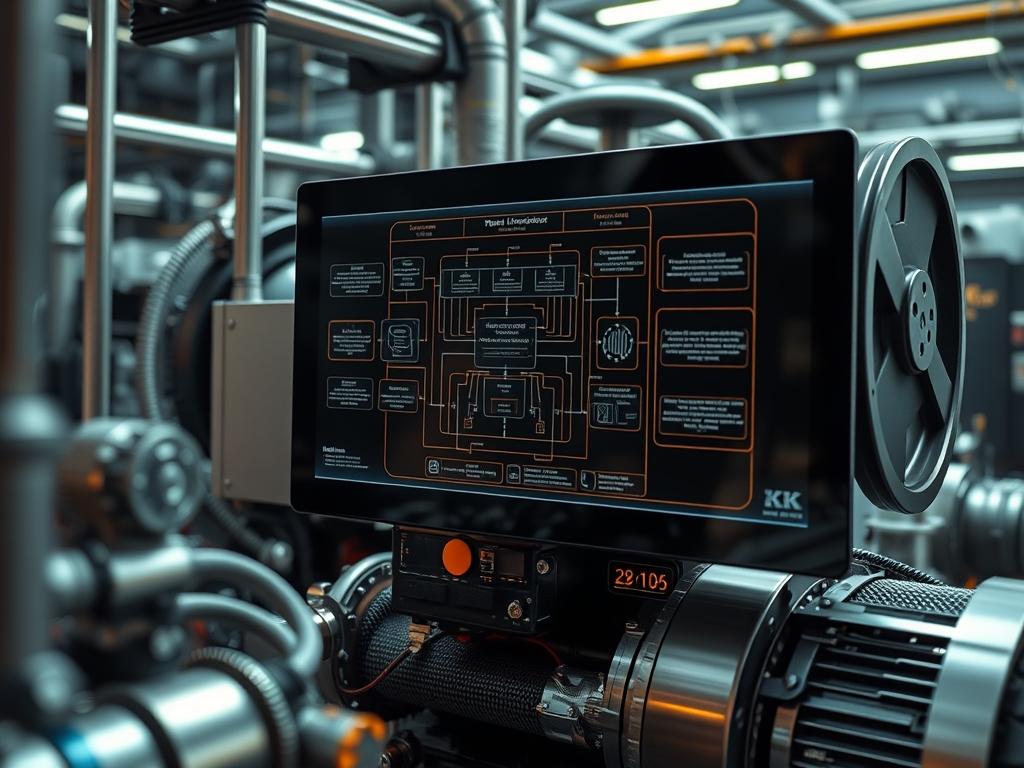
Compressor Shell Temperature Delta serves as a critical diagnostic metric within high-density thermal management stacks; it provides a transparent view into the internal mechanical health of reclamation and cooling loops. In large-scale infrastructure, such as Tier IV data centers or industrial energy plants, monitoring this delta is not merely a maintenance task but a prerequisite for operational stability. The metric quantifies the divergence between the internal motor heat, discharge gas temperatures, and the external radiant heat of the housing. When internal friction increases due to lubrication failure, bearing degradation, or liquid slugging, the Compressor Shell Temperature Delta deviates from established baselines. This manual outlines the procedures for identifying these friction points through precise thermal telemetry and logic-gate analysis. By correlating shell temperature against the saturation temperature of the refrigerant, architects can preempt catastrophic mechanical failure and optimize the thermal-inertia profile of the entire cooling subsystem.
Technical Specifications
| Requirement | Default Operating Range | Protocol/Standard | Impact Level (1-10) | Recommended Resources |
| :— | :— | :— | :— | :— |
| NTC Thermistor | -40C to +150C | IEEE 1451.4 | 9 | 1k Ohm Precision |
| Modbus Gateway | Node ID: 0-247 | Modbus TCP/RTU | 7 | RS-485 Shielded |
| Logic Controller | 100ms Polling | IEC 61131-3 | 8 | 512MB RAM / 1GHz CPU |
| Refrigerant Sensor| 0 to 500 PSIG | 4-20mA Analog | 6 | Stainless Steel 316 |
| Telemetry Bus | 9600 to 115200 bps | UART / Ethernet | 5 | Cat6a / STP |
The Configuration Protocol
Environment Prerequisites:
Successful implementation requires a calibrated Fluke-710 Valve Tester or a similar precision multimeter for signal verification. The underlying control layer must support IEC 61131-3 programming standards; furthermore, the technician must possess sudo or administrative access to the Head-End Station (HES). Physical prerequisites include the installation of dual Type-K Thermocouples or PT1000 sensors: one mounted on the top center of the compressor shell and one on the discharge line 6 inches from the service valve. Ensure all electrical connections comply with NEC Class 2 low-voltage wiring requirements to prevent signal-attenuation in high-EMI environments.
Section A: Implementation Logic:
The engineering design relies on the principle of heat dissipation via mass flow. In an ideal state, the compressor shell remains at a predictable temperature relative to the discharge gas. Internal friction disrupts this equilibrium. As bearings wear or lubrication loses its viscosity, the mechanical energy lost to friction is converted into heat. This heat is not immediately absorbed by the refrigerant gas but is instead conducted through the compressor’s stationary components to the shell. By monitoring the Compressor Shell Temperature Delta, we identify the “Heat Signature of Failure.” The logic is idempotent; repeatedly checking the delta under the same load conditions must yield the same result unless a mechanical shift has occurred. This reduces the overhead of false-positive alerts in the monitoring stack.
Step-By-Step Execution
1. Initialize the Sensor Hardware Interface
Connect the NTC Thermistors to the Analog Input Module of the PLC. Use a Fluke-multimeter to verify that the resistance readings align with the manufacturer’s lookup table.
System Note: This action establishes the physical data layer; the PLC kernel converts the raw voltage or resistance into a floating-point temperature variable for the payload delivery.
2. Configure the Modbus Registry Map
Access the Logic-Controller via SSH or a terminal emulator. Define the memory addresses for the shell temperature and discharge temperature.
System Note: Mapping the I/O at the register level ensures low-latency data retrieval; it prevents packet-loss during high-concurrency polling cycles by the SCADA master.
3. Establish the Baseline Thermal-Inertia
Run the compressor at 100 percent load for 60 minutes. Record the equilibrium temperature of the shell.
System Note: This step accounts for the thermal mass of the iron housing. It ensures that the throughput of the cooling calculations is normalized against the specific metal grade of the unit.
4. Deploy the Delta Calculation Script
Input the following logic into the controller: DELTA = ABS(SHELL_TEMP – DISCHARGE_TEMP). Define a threshold of 30F (16.6C) above baseline for an alarm trigger.
System Note: This logic resides in the application layer. The systemctl process manages the execution of the monitoring service to ensure consistent uptime and automated restarts upon failure.
5. Validate Signal-Attenuation and Shielding
Check the UART error logs or Ethernet frame counters on the gateway.
System Note: High electromagnetic interference from the compressor motor can cause signal-attenuation. Properly grounded shielding ensures the integrity of the thermal payload being transmitted to the analytics engine.
Section B: Dependency Fault-Lines:
The most common failure point in monitoring Compressor Shell Temperature Delta is the mechanical coupling of the sensor. If the thermistor is not thermally bonded to the shell using high-conductivity paste, the reading will lag significantly behind the actual temperature, causing a false sense of security. Software-side bottlenecks often occur when the Modbus RTU bus is overloaded with too many nodes; this increases latency and can lead to missed thermal spikes. Furthermore, if the PID loop on the expansion valve is hunting, the resulting fluctuations in refrigerant mass flow will create “noise” in the temperature delta, obscuring the signal of actual mechanical friction.
The Troubleshooting Matrix
Section C: Logs & Debugging:
When a high-friction alert is triggered, navigate to /var/log/hvac_monitoring.log to extract the raw telemetry data. Look for error string ERR_THERM_OOR (Out of Range), which usually indicates a failed sensor or a disconnected lead. If the delta is rising but the discharge temperature remains constant, the friction is likely located in the lower bearing assembly or the oil pump.
Verify the sensor readout against the physical asset using an IR thermometer at the specific coordinate defined in the CAD diagram. If the Logic-Controller reports a value that deviates more than 2 percent from the IR reading, check the encapsulation of the sensor wire. Any breach in the insulation will introduce resistance, leading to an artificially high temperature reading. For Modbus issues, use the command tcpdump -i eth0 port 502 to inspect the traffic; ensure there are no malformed packets causing a disruption in the telemetry stream.
Optimization & Hardening
Performance Tuning:
To increase the sensitivity of the friction detection, implement a rolling average filter in the logic script. This reduces the impact of transient thermal fluctuations. Adjust the concurrency of the polling engine to prioritize the Compressor Shell Temperature Delta registers over non-critical points like ambient air temperature. Increasing the polling frequency from 10 seconds to 1 second allows for the capture of “Micro-Friction” events that occur during startup and shutdown cycles.
Security Hardening:
Restrict access to the Logic-Controller using iptables; only allow traffic from the authorized IP of the management console. Ensure all Modbus/TCP traffic is encapsulated within a VPN or a TLS tunnel if it traverses the public network. At the physical layer, use fail-safe logic: if the shell sensor fails, the system should default to a “High-Alert” state to prevent unmonitored operation.
Scaling Logic:
As the infrastructure expands to include hundreds of compressors, move the delta calculation from individual PLCs to a centralized Kubernetes cluster running an InfluxDB and Grafana stack. This allows for cross-unit correlation and predictive maintenance using machine learning models that can identify friction patterns across different compressor frames and refrigerant types.
The Admin Desk
How do I reset a false thermal trigger?
Execute a systemctl restart hvac_monitor command to clear the volatile memory. If the delta remains high, manually verify the shell temperature with an IR probe to ensure the friction is not a physical reality before resuming operations.
Why is the delta lower during low-load intervals?
During low-load, the mass flow decreases and the motor generates less waste heat. The Compressor Shell Temperature Delta is a load-dependent variable; always compare current readings against a baseline mapped to the specific Hz or capacity step.
What causes a negative delta reading?
A negative delta (Shell hotter than Discharge) typically indicates severe motor winding failure or extreme internal friction. Inspect the stator and oil sump immediately. This state suggests the shell is becoming a primary heat sink for mechanical loss.
Can I monitor delta via 4-20mA loops?
Yes. Map the 4mA signal to 40C and the 20mA signal to 110C. Ensure the PLC scaling factor is idempotent across all channels to maintain data integrity when identifying friction across multiple parallel compressor racks.