
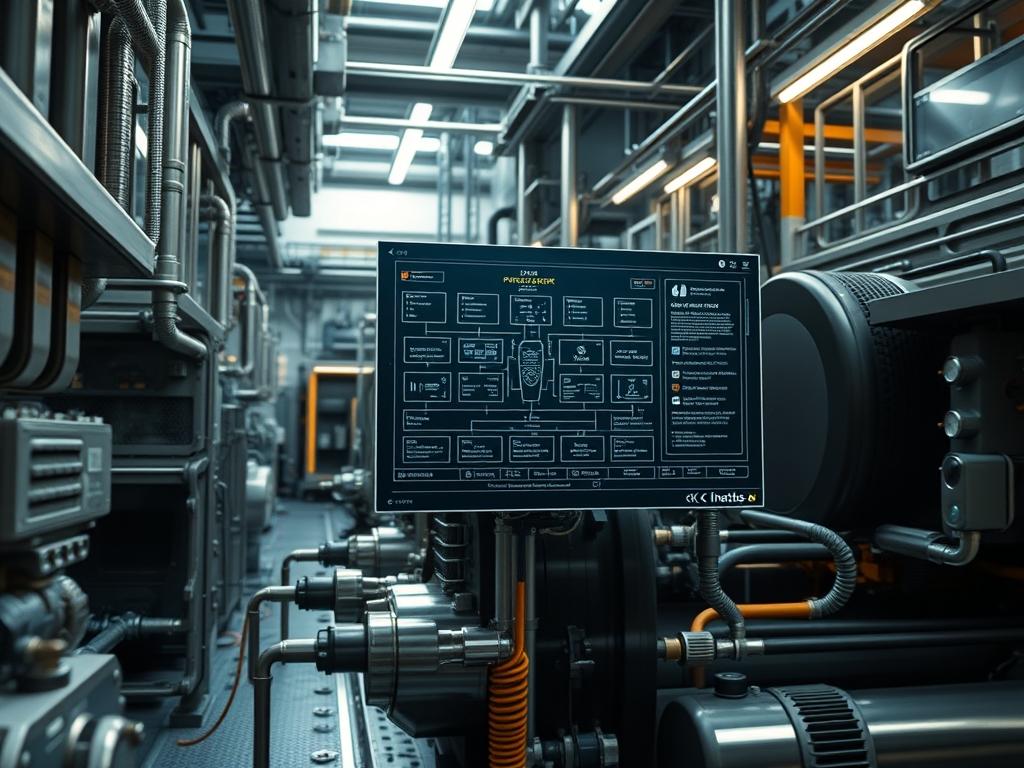
Compressor Re-Manufacturing Steps represent a high precision engineering lifecycle designed to restore failed industrial assets to original performance specifications. This process is not merely a repair; it is a holistic overhaul that integrates mechanical restoration with advanced digital monitoring. Within the broader technical stack of industrial infrastructure, such as chilled water loops or high pressure gas distribution, the compressor acts as the primary driver of throughput. If the compressor fails or operates with high latency in pressure build-up, the entire downstream system experiences a cascade of efficiency losses. The problem addressed by these steps is the degradation of structural integrity and the loss of thermal-inertia in aged units. By following a standardized re-manufacturing protocol, architects ensure that the asset undergoes a transformation that is idempotent: regardless of the specific failure mode, the output is a unit with predictable performance and modernized logic controls. This ensures high availability within critical network infrastructures and reduces the total cost of ownership for heavy machinery.
Technical Specifications
| Requirement | Default Port/Operating Range | Protocol/Standard | Impact Level (1-10) | Recommended Resources |
| :— | :— | :— | :— | :— |
| Shaft Tolerance | 0.001 – 0.005 inches | ISO 286-2 | 10 | Case-hardened Alloy Steel |
| Insulation Resistance | >1000 M-ohms @ 500VDC | IEEE 43-2000 | 9 | Grade H Resin / Megger |
| Control Logic Link | Port 502 (Modbus/TCP) | IEC 61131-3 | 7 | 512MB RAM / 1GHz PLC |
| Thermal Threshold | -40C to 155C | NEMA MG-1 | 8 | Thermal-couple Type K |
| Lubrication Flow | 0.5 – 2.5 GPM | ASME PTC 9 | 9 | Synthetic Ester Oil |
| Signal Integrity | 4-20mA Current Loops | ISA 5.1 | 6 | Shielded Twisted Pair |
THE CONFIGURATION PROTOCOL
Environment Prerequisites:
Before initiating the Compressor Re-Manufacturing Steps, the facility must adhere to specific architectural requirements. All workstations must be grounded per NEC Article 250 to prevent electrostatic discharge during control board handling. Personnel require root_access to the local SCADA (Supervisory Control and Data Acquisition) system to update the asset registry and firmware versions. Software dependencies include specialized diagnostic suites like Fluke Connect or Rockwell Studio 5000 for PLC recalibration. Material dependencies involve high-grade replacement components that must match or exceed the ASTM standards of the original casting.
Section A: Implementation Logic:
The engineering design of this protocol is rooted in the concept of encapsulation. We treat the compressor as an encapsulated object within the energy system; its internal state (piston clearance, valve efficiency, motor winding health) must be invisible to the external system, providing only the expected throughput and payload of compressed gas. The “Why” behind this sequence is the mitigation of signal-attenuation in mechanical feedback loops. By restoring physical tolerances and updating sensor logic simultaneously, we minimize the overhead of mechanical friction and electrical resistance. This design ensures that subsequent operations under high concurrency—such as multiple compressors feeding a single header—are balanced and efficient.
Step-By-Step Execution
1. Initial Diagnostic Archeology
The first step involves extracting the historical performance logs from the local Logic-Controller. Use a fluke-multimeter to verify the current state of the motor windings and the integrity of the thermal sensors.
System Note: This action establishes a baseline for the kernel of the machine’s operation. By analyzing the “Fault History” stored in the EEPROM, technicians can identify if the failure was a transient event or a persistent mechanical bottleneck.
2. Full Physical Deconstruction
Completely disassemble the unit into its fundamental components: the crankshaft, pistons, valve plates, and stator. Use a high-pressure chemical wash to remove all contaminants and carbon buildup.
System Note: This step is analogous to clearing a cache. Removing the physical “legacy data” (sludge and wear particles) ensures that the subsequent assembly does not inherit the latency issues caused by previous duty cycles.
3. Precision Machining and Boring
The cylinder walls must be bored to an oversize spec if scoring is present, and the crankshaft must be polished to a mirror finish. Use a surface-grinder to ensure the valve plates are flat within two microns.
System Note: Machining modifies the physical hardware abstraction layer. By tightening these tolerances, we reduce the bypass leakage, thereby increasing the volumetric throughput of the system.
4. Stator Re-winding and VPI
If the motor shows signs of insulation breakdown, the stator must be stripped and rewound with high-grade copper. Apply Vacuum Pressure Impregnation (VPI) to encapsulate the windings in resin.
System Note: This improves the electrical thermal-inertia of the motor. It prevents signal-attenuation within the electromagnetic field, ensuring that the input power is converted to torque with minimal overhead loss.
5. Component Integration and Tolerance Validation
Reassemble the unit using new bearings, rings, and gaskets. Use a calibrated torque-wrench to follow the specific tightening sequence defined in the OEM service manual to ensure even load distribution.
System Note: This is the assembly of the “Physical Payload”. Each bolt torque setting is a variable that affects the structural stability of the chassis. Incorrect torque can lead to vibration-induced packet-loss in the sensor data via loose connections.
6. Logic Controller Calibration and Firmware Update
Connect the compressor’s instrumentation to the PLC (Programmable Logic Controller). Update the firmware to the latest stable version and calibrate the 4-20mA pressure transducers to match the physical gauges.
System Note: Using systemctl restart industrial-comms.service or equivalent logic triggers, this step ensures the digital twin of the compressor accurately reflects its new mechanical capabilities. This reduces the latency between a pressure drop and the motor’s ramp-up response.
7. Benchmarking and Load Testing
Run the compressor under a graduated load, monitoring for vibration, amperage draw, and discharge temperature. Use an ultrasonic flow meter to verify the mass flow rate.
System Note: This final validation acts as a stress test for the entire unit. It confirms that the concurrency of mechanical and electrical systems can handle the maximum payload without exceeding thermal limits.
Section B: Dependency Fault-Lines:
Failure in the Compressor Re-Manufacturing Steps often stems from “Hidden Dependencies.” For example, if the lubrication-pump is not replaced or is improperly primed, the entire assembly will experience catastrophic friction within seconds of startup. Another common bottleneck is the mismatch between the new mechanical capabilities and the old VFD (Variable Frequency Drive) parameters. If the VFD ramp-up time is too aggressive, it can cause a high-torque event that shears the new keys on the crankshaft. Always verify that the firmware version on the controller is compatible with the mechanical compression ratio of the re-manufactured unit.
THE TROUBLESHOOTING MATRIX
Section C: Logs & Debugging:
When a re-manufactured unit fails to initialize, the first point of audit is the System Error Log located at /var/log/industrial/compressor01.err or within the PLC’s diagnostic buffer.
Look for specific error strings:
– Error 0x04 (High Discharge Temp): This often indicates a failure in the thermal-bypass-valve or an incorrect clearance-volume during assembly. Verify physical measurements vs. the 0x40001 Modbus register.
– Error 0x09 (Low Oil Pressure): Check the logic-controller logic for the “Oil Pressure Safety” delay. If the sensor lead has high signal-attenuation, the PLC may trip the unit prematurely.
– Error 0x12 (Overcurrent): This points to a mechanical bind or a phase imbalance in the stator. Use a megger to test the insulation resistance at the TEBOX (Terminal Box) terminals.
Visual cues are equally vital. A blue tint on the crankshaft journals suggests a failure in the lubrication throughput, while “slugging” sounds indicate liquid refrigerant entering the suction port, a failure of the external system’s encapsulation of the compressor.
OPTIMIZATION & HARDENING
Performance Tuning:
To maximize throughput, implement a Feed-Forward control loop in the PLC. This allows the compressor to anticipate load changes based on upstream sensor data, reducing the latency of the PID response. Fine-tuning the clearance-pockets can also reduce the energy overhead during low-demand periods.
Security Hardening:
In a modern network infrastructure, the compressor is an IoT endpoint. Disable all unused ports on the communication-module (e.g., Telnet or HTTP) and restrict Modbus access to a specific VLAN. Implement a physical fail-safe logic that bypasses the software; if the pressure exceeds the ASME burst disk rating, a mechanical relief valve must trigger regardless of the PLC state.
Scaling Logic:
When scaling an installation by adding multiple re-manufactured units, use a Lead-Lag sequencer. This ensures that runtime is distributed evenly across the fleet, preventing a single point of failure. This approach manages the collective thermal-inertia of the facility and allows for scheduled maintenance windows without taking the entire network offline.
THE ADMIN DESK: FAQ
Q: Can I skip the VPI process for the motor?
No. Skipping VPI increases the risk of winding vibration and moisture ingress. This leads to premature insulation failure and high electrical latency, eventually causing a total system short.
Q: How do I verify the “idempotent” nature of my re-manufacturing?
Run the “Standardized Load Test” three times. If the discharge pressure and amperage deviate by more than 1% between runs, the assembly process is not yet stable.
Q: What involves the highest “overhead” in this process?
The cleaning and de-carbonization phase. However, neglecting this ensures that microscopic debris will contaminate the new synthetic ester oil, leading to rapid seal degradation.
Q: Why is Port 502 important if the machine is mechanical?
Port 502 is the gateway for Modbus/TCP, which allows the compressor to communicate its health to the Cloud or SCADA. Without this, you have no visibility into real-time throughput.
Q: What causes “High Signal-Attenuation” in the sensors?
Usually, it is the lack of shielded cabling or running sensor lines too close to high-voltage motor leads. This creates electromagnetic interference that masks the true payload data.