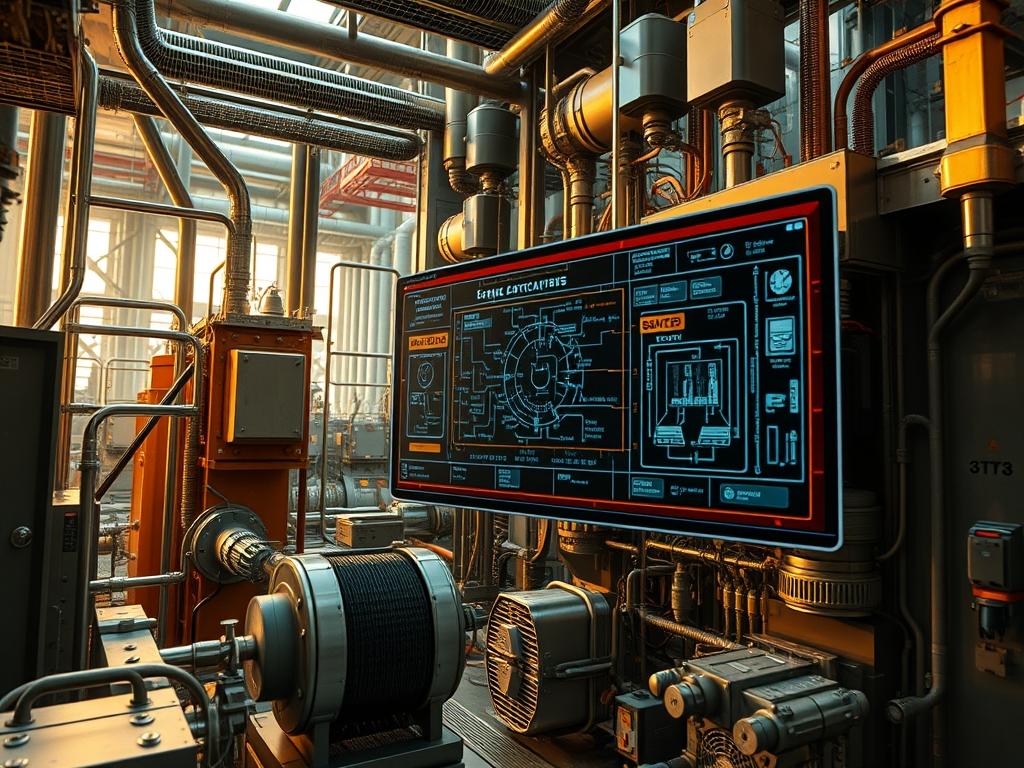
Comparing Electric Hot Gas and Air Defrost Logic

Industrial Evaporator Defrost Logic

Industrial evaporator defrost logic represents the critical control layer managing the transition between refrigeration cycles and thermal restoration sequences. In industrial environments, such as cold storage or chemical processing, frost accumulation on evaporator fins creates an insulating barrier that increases thermal resistance and reduces air-side throughput. This accumulation leads to a drop in suction pressure … Read more

Testing and Replacing Ammonia Relief Valve Standards

Ammonia Relief Valve Maintenance

Ammonia Relief Valve Maintenance represents the critical junction between mechanical reliability and life safety within industrial refrigeration architectures. These valves serve as the ultimate fail-safe mechanism in anhydrous ammonia systems; they are designed to prevent catastrophic structural failure when internal pressures exceed the Maximum Allowable Working Pressure (MAWP) of the vessel. In the broader technical … Read more

Optimizing Pipe Sizing via Refrigerant Pressure Drop Analysis

Refrigerant Pressure Drop Analysis

Refrigerant Pressure Drop Analysis constitutes the foundational methodology for optimizing thermal transport in industrial cooling systems. Within a complex technical stack involving Building Automation Systems (BAS), variable-frequency drives, and thermodynamic loops, the piping network serves as the physical transport layer. This layer accounts for the majority of parasitic energy losses if not sized with precision. … Read more

Scheduled Service Tasks for Industrial Refrigeration Maintenance

Industrial Refrigeration Maintenance

Industrial Refrigeration Maintenance is a critical discipline within the modern technical stack; it functions as the foundational thermal management layer for global supply chains, energy infrastructure, and large-scale data center cooling. Within this ecosystem, refrigeration systems are no longer isolated mechanical assets. They are highly integrated nodes that communicate via industrial protocols such as Modbus … Read more

Designing Failsafes with Refrigeration Emergency Shutdown Protocols

Refrigeration Emergency Shutdown

Refrigeration Emergency Shutdown (RES) logic serves as the critical safety layer within high-capacity thermal management infrastructures. Whether integrated into Tier IV data center cooling loops, industrial pharmaceutical cold chains, or chemical processing plants, the RES protocol functions as a hard-coded override to the standard operational PID (Proportional-Integral-Derivative) loops. The primary objective of an RES deployment … Read more

A Technical Comparison of Air Cooled vs Water Cooled Chillers

Air Cooled vs Water Cooled Chillers

Industrial cooling systems represent a foundational layer in macroscopic engineering stacks; they serve as the primary thermal management solution for data centers, medical facilities, and high-density manufacturing hubs. Within the broader infrastructure context, the decision between Air Cooled vs Water Cooled Chillers dictates the thermal-inertia and energy-efficiency profiles of the entire facility. Air-cooled systems utilize … Read more

Engineering Stability in Industrial Process Cooling Water Loops

Process Cooling Water Loops

Process Cooling Water Loops serve as the thermodynamic backbone for high density industrial environments; including semiconductor fabrication plants, heavy chemical processing facilities, and large scale data centers. These systems provide a critical heat sink for sensitive equipment by circulating chilled water through complex networks of piping, heat exchangers, and cooling towers. The primary technical challenge … Read more

Protecting Heat Transfer Surfaces with Oil Separator Logic

Refrigeration Oil Separator Logic

Refrigeration Oil Separator Logic functions as a critical abstraction layer between the lubricant management system and the thermodynamic core of an industrial cooling architecture. In high capacity systems; the migration of compressor oil into heat transfer surfaces constitutes a significant form of thermal-inertia. This intrusion creates a film that degrades heat exchange efficiency; effectively acting … Read more

Thermal Image Auditing for Cold Room Insulation Integrity

Cold Room Insulation Integrity

Cold Room Insulation Integrity represents the physical layer of the cold chain; it is the fundamental barrier protecting temperature-sensitive assets from ambient thermal energy. In the context of the modern technical stack, this integrity acts as the physical equivalent of a low-latency network interface: any degradation in the insulation envelope results in increased power consumption, … Read more

Precision Superheat via Industrial Electronic Expansion Valve Tuning

Electronic Expansion Valve Tuning

Electronic Expansion Valve Tuning represents the critical intersection of thermodynamic precision and industrial automation within modern thermal management systems. In the context of high-density cloud infrastructure and industrial process cooling, the Electronic Expansion Valve (EEV) serves as the primary gatekeeper for refrigerant mass flow. Unlike traditional mechanical thermostatic valves, an EEV utilizes a stepper motor … Read more