Designing Technical Dashboards for BMS Head End Visualization
BMS Head End Visualization

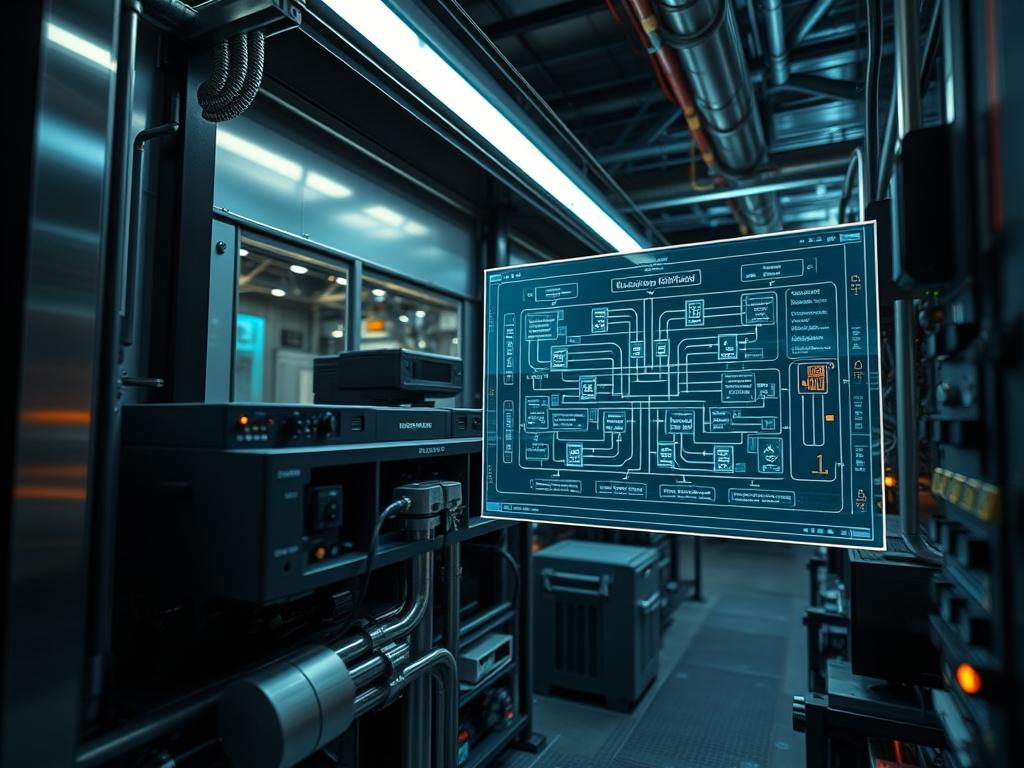
BMS Head End Visualization serves as the critical management tier within the modern technical stack; it bridges the gap between raw field-level telemetry and high-level operational intelligence. In the context of large-scale infrastructure, whether it be energy grids, water treatment facilities, or enterprise data centers, the head end provides the “Single Pane of Glass” necessary … Read more
Precision Airflow Management using VAV Box Automation Logic

VAV Box Automation Logic

VAV Box Automation Logic represents the critical middleware layer between thermodynamic demand and mechanical delivery within modern Building Management Systems (BMS). It functions as an idempotent control loop designed to regulate thermal-inertia by modulating airflow volume rather than adjusting supply air temperature at the terminal point. This architecture is vital for minimizing energy overhead in … Read more

Orchestrating Multi Room Comfort with HVAC Zone Controller Logic

HVAC Zone Controller Logic

HVAC Zone Controller Logic represents the orchestration layer of modern environmental control systems. It functions as the primary state machine between disparate thermostat clusters and the central Air Handling Unit (AHU). In the broader technical stack; this logic resides at the intersection of energy management and local hardware abstraction. The core problem this architecture solves … Read more

Connecting Cloud Intelligence via Smart Thermostat API Integration

Smart Thermostat API Integration

Smart Thermostat API Integration serves as the critical bridge between physical HVAC hardware and cloud-based energy management systems. This architectural layer transforms local climate control units into intelligent nodes within a larger enterprise network; allowing for the bidirectional flow of environmental telemetry and remote control setpoints. In the context of modern infrastructure; this integration addresses … Read more

Optimizing Response Curves through PID Tuning for Thermal Stability

PID Tuning for Thermal Stability

PID Tuning for Thermal Stability represents the critical intersection of control theory and physical infrastructure management. Within the modern technical stack; whether managing high-density server clusters, chemical processing units, or large-scale energy storage systems; the ability to maintain a precise temperature setpoint is paramount. Thermal management is not merely about cooling; it is the art … Read more

Implementing Reliable Field Comms via Modbus RTU for HVAC Systems

Modbus RTU for HVAC Systems

Modbus RTU for HVAC Systems remains the industry standard for field-level communication despite the rise of IP-based protocols. It operates primarily over the RS-485 physical layer; providing a robust, noise-resistant medium for monitoring Variable Frequency Drives (VFDs), chillers, and Air Handling Units (AHUs). Because HVAC systems exhibit high thermal-inertia, real-time millisecond response is often less … Read more

Engineering Seamless Integration with BACnet Protocol Architecture

BACnet Protocol Architecture

BACnet Protocol Architecture serves as the foundational communication layer for modern Building Automation Systems (BAS). It facilitates high-level interoperability between disparate subsystems such as HVAC, lighting control, security, and access management. Within the broader technical stack, BACnet operates as a standard for data exchange across localized RS-485 segments and wide-area IP networks. The architectural challenge … Read more

Enhancing System Oversight via GSHP Operational Data Visualization

GSHP Operational Data Visualization

GSHP Operational Data Visualization serves as the critical nexus between raw thermodynamic telemetry and actionable facility intelligence. In high-performance infrastructure; the ground source heat pump represents a complex interplay of geothermal thermal-exchange, refrigerant compression logic, and hydronic distribution. Without a robust visualization framework; operators are blind to the subtle shifts in thermal-inertia that indicate impending … Read more

Designing for Long Term Ground Loop Manifold Accessibility

Ground Loop Manifold Accessibility

Ground loop manifold accessibility represents the critical interface between subsurface geo-exchange fields and the internal mechanical distribution stack. In geothermal architecture; the manifold serves as the primary distribution header where individual circuit loops converge before entering the heat pump circuit. Failure to prioritize long term accessibility results in increased maintenance latency and elevated operational overhead … Read more

Protecting Structures with GSHP Vibration Isolation Hangers

GSHP Vibration Isolation Hangers

Ground Source Heat Pump (GSHP) systems represent a critical intersection of high-efficiency energy transfer and complex mechanical integration. While the environmental benefits of geothermal exchanges are significant, the mechanical throughput of the primary heat pump unit generates substantial low-frequency kinetic energy. Without proper mitigation, this energy manifests as structural vibration, propagating through the building’s skeleton … Read more