
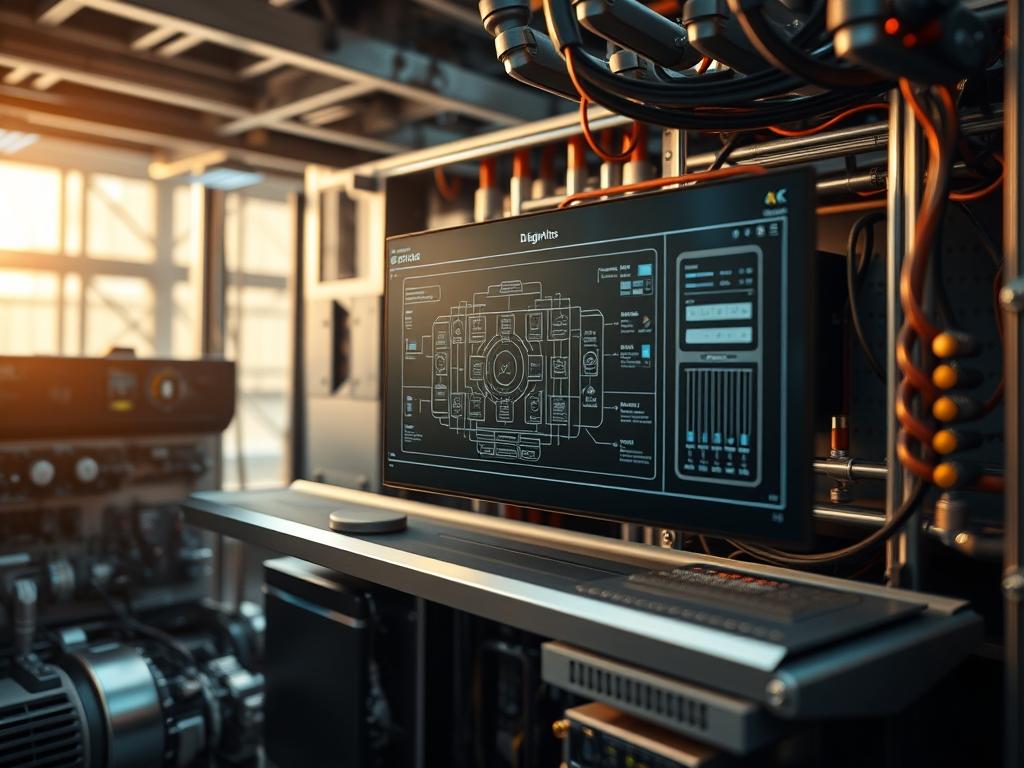
Transcritical CO2 Rack Engineering represents the pinnacle of modern thermal management and sustainable refrigeration infrastructure. Unlike subcritical cycles that operate below the refrigerant’s critical point; a transcritical system utilizes R744 (Carbon Dioxide) at pressures exceeding 73.8 bar and temperatures above 31.1 degrees Celsius. This shift from a subcritical to a transcritical state necessitates fundamentally different engineering architectures to manage extreme operating pressures that often reach 120 bar on the high side. The problem solved by this engineering approach is twofold: it eliminates high-GWP (Global Warming Potential) synthetic refrigerants and provides high-grade heat reclaim capabilities for facility-wide energy efficiency. In the broader technical stack; this system functions as the primary thermal layer; interfacing with building management systems via Modbus or BACnet to provide cooling loads for data centers; medium-temperature storage; or industrial processes. As a Senior Infrastructure Auditor; the focus remains on the structural integrity of the high-pressure loop and the precision of the electronic expansion valves that govern the transition between gas and liquid states.
Technical Specifications
| Requirement | Default Port / Operating Range | Protocol / Standard | Impact Level (1-10) | Recommended Resources |
| :— | :— | :— | :— | :— |
| High Pressure Side | 90 to 120 Bar | ASME B31.5 / EN 378 | 10 | Stainless Steel 304/316L |
| Low Pressure (Suction) | 25 to 35 Bar | ASHRAE 15 | 8 | K65 Copper Alloy |
| Controller Communication | Port 502 (TCP) | Modbus TCP/IP | 7 | 2GB RAM / 1.2GHz CPU |
| Sensor Accuracy | +/- 0.5 degrees C | 4-20mA / 0-10V | 9 | PT1000 RTD Sensors |
| Flash Tank Pressure | 35 to 45 Bar | PED 2014/68/EU | 9 | High-Strength Carbon Steel |
| Emergency Ventilation | 1,500 CFM minimum | UL 60335-2-89 | 10 | Redundant Exhaust Fans |
The Configuration Protocol
Environment Prerequisites:
Successful deployment of Transcritical CO2 Rack Engineering requires strict adherence to material science and electrical standards. You must ensure that all piping follows the ASME B31.5 refrigeration piping code. The control hardware requires a Linux-based runtime; typically an Emerson Lumity or Danfoss AK-SM 800 series; with root access permissions for custom PID loop tuning. All technicians must be certified for high-pressure gas handling; and the physical space must be equipped with CO2 leak detection sensors calibrated to trip at 5,000 ppm for safety and 30,000 ppm for emergency shutdown.
Section A: Implementation Logic:
The engineering logic of a transcritical cycle is built upon the rejection of heat at supercritical pressures. Because CO2 cannot condense at temperatures above 31.1 degrees Celsius; the traditional “condenser” is replaced by a Gas Cooler. The theoretical goal is to maximize the thermal-inertia of the heat rejection process to maintain the throughput of the refrigerant mass flow. We use an Electronic High-Pressure Valve (HPV) to maintain optimal pressure in the gas cooler regardless of ambient temperature. This is idempotent in its logic; for any given ambient temperature; there is a singular optimal pressure that yields the highest Coefficient of Performance (COP). By decoupling the pressure from the temperature in the supercritical region; we gain granular control over the system’s energy consumption and heating capacity.
Step-By-Step Execution
Step 1: High-Pressure Loop Structural Verification
Conduct a hydrostatic or dry nitrogen pressure test on the Main Discharge Header. The pressure must be held at 1.1 times the maximum allowable pressure (PS) for 24 hours. Use a Fluke-multimeter to verify that all pressure transducers are returning a consistent 4mA signal at 0 bar.
System Note: This action ensures the physical kernel of the system can withstand the extreme payload of high-pressure R744 without mechanical failure or signal-attenuation from faulty sensors.
Step 2: Integrating the Electronic Expansion Valve (EEV) Controller
Configure the rack controller via the terminal interface or web GUI. Navigate to the Network Settings and assign a static IP. Enable Modbus TCP on Port 502. Use systemctl restart refrigeration-service to apply the new configuration.
System Note: This step establishes the communication pathway between the Logic-Controller and the physical valves; reducing latency in the opening/closing cycles of the expansion process.
Step 3: Flash Tank Bypass Valve Calibration
Manually override the Flash Gas Bypass Valve (FGBV) via the controller software. Monitor the pressure in the Flash Tank using a calibrated gauge. Adjust the PID parameters—Proportional Gain; Integral Time; and Derivative Time—until the tank pressure stabilizes at 38 bar.
System Note: Precise FGBV control prevents the accumulation of non-condensable gas in the liquid line; ensuring that the concurrency of liquid delivery to the evaporators is maintained.
Step 4: Gas Cooler Fan Sequencing and VFD Setup
Program the Variable Frequency Drives (VFDs) for the gas cooler motors. Set the minimum frequency to 20Hz and the maximum to 60Hz. Map the control signal to the Gas Cooler Exit Temperature Sensor.
System Note: This optimizes the throughput of air over the coils; minimizing the overhead energy usage of the fans while maximizing heat rejection during transcritical operation.
Step 5: Oil Management System Initialization
Charge the Oil Separator with the manufacturer-specified POE or PAG oil. Verify that the Oil Level Optical Sensor is correctly reporting to the controller via a Logic-State check. Trigger the Oil Return Solenoid to ensure the path to the compressor crankcase is clear.
System Note: Proper lubrication management is critical to reducing mechanical latency and preventing compressor seizure under high-load transcritical conditions.
Section B: Dependency Fault-Lines:
The most common point of failure in Transcritical CO2 Rack Engineering is the “Triple Point” risk during charging. If R744 is introduced as a liquid into a vacuum; it will transition into dry ice; creating mechanical blockages. Another bottleneck is thermal-inertia mismatch; where the gas cooler is undersized for the peak summer ambient temperatures; forcing the system into a high-pressure safety cut-out. Software-side conflicts often arise when the Modbus polling rate is too high; leading to packet-loss in the sensor data and causing the PID loops to oscillate and lose stability.
THE TROUBLESHOOTING MATRIX
Section C: Logs & Debugging:
Log analysis should begin at /var/log/syslog for controller errors or the specific application path /opt/refrigeration/logs/alarm.log.
1. Error Code E042 (High Discharge Temperature): Check the High Pressure Valve for debris. Verify the HPV position in the logs; if it is at 100% and pressure is still high; inspect the gas cooler for fouling.
2. Error Code E015 (Low Oil Pressure): Analyze the Oil Differential Pressure sensor. Use a Fluke-multimeter to check for 24V DC at the solenoid coil. Path: /sys/class/gpio/gpio18/value.
3. Sensor Drift: If the suction temperature reads +120C; check the PT1000 wiring for a short circuit or signal-attenuation. Verify resistance values against the standard R-T curve.
4. Flash Tank Overpressure: This is often caused by a failing FGBV. Check the manual override status. If the valve is not responding to chmod 666 /dev/vfd_control; the motor assembly may be mechanically seized.
OPTIMIZATION & HARDENING
Performance Tuning:
To enhance thermal efficiency; implement parallel compression. This involves adding a dedicated compressor to handle the flash gas directly from the flash tank at a higher suction pressure. This reduces the overhead on the primary suction group and increases total system throughput. Adjust the concurrency of compressor staging to ensure that the lead compressor does not short-cycle; which minimizes wear and tear.
Security Hardening:
All refrigeration controllers must be isolated on a dedicated VLAN. Disable all unused services such as Telnet or HTTP in favor of SSH and HTTPS. Apply strict firewall rules via iptables to allow only known IP addresses from the maintenance subnet to access the Modbus gateway. Ensure that the fail-safe logic is hard-wired; meaning that a loss of control signal must force all valves into a “safe” state (typically HPV open; EEV closed).
Scaling Logic:
When expanding the rack for higher loads; use an encapsulation strategy for the piping headers. Instead of increasing pipe diameter indefinitely; which increases the risk of oil return issues; utilize multiple smaller headers in a balanced parallel configuration. This maintains refrigerant velocity and ensures that thermal-inertia is distributed evenly across the increased evaporator surface area.
THE ADMIN DESK
How do I handle a dry ice blockage during charging?
Stop liquid charging immediately. Use the bypass valves to introduce vapor-phase CO2 until the system pressure rises above 7 bar. This ensures the R744 stays in a gaseous state before liquid is introduced.
What causes frequent HPV oscillations?
This is usually a PID tuning issue or latency in the pressure transducer. Increase the “D” (Derivative) term or reduce the “P” (Proportional) gain to dampen the response to sudden pressure spikes.
Can I use standard copper pipes for the high side?
No. Standard copper cannot withstand the 120 bar transcritical pressures. You must use K65 Copper Alloy or Stainless Steel 316L to ensure the safety and longevity of the pressure vessel.
Why is my COP lower in the summer?
In high ambient temperatures; the system enters transcritical mode where it fails to condense CO2. The overhead of compressing gas without the benefit of latent heat rejection significantly reduces the total efficiency.
How do I clear a “Communication Loss” alarm?
Check the physical RS485 or Ethernet connection. Verify the Modbus slave ID matches the software configuration. Use ping to check the controller’s responsiveness on the network.