
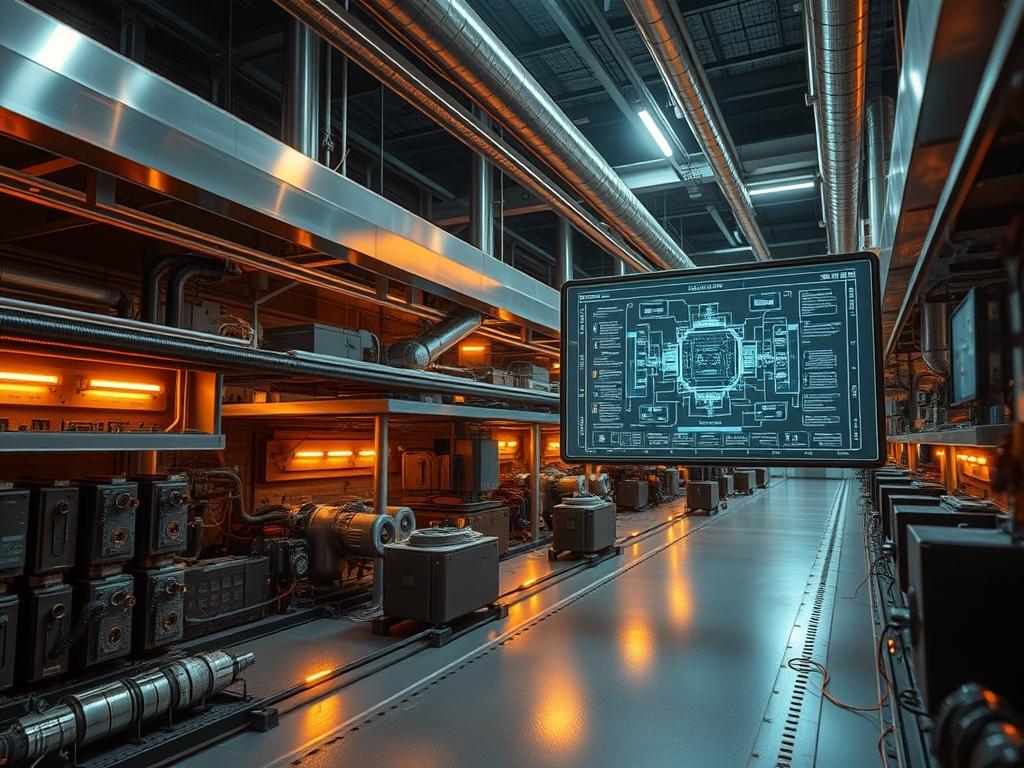
Mineral Wool Fire Resistance represents the primary passive protection layer within critical physical infrastructure; it serves as a non-combustible barrier designed to maintain structural integrity during extreme thermal events. In the context of the modern technical stack, specifically regarding data centers and high-scale industrial facilities, this material functions as the physical “Layer 0” firewall. It mitigates the risk of thermal runaway by providing high thermal-inertia, which significantly slows the rate of heat transfer from the source to sensitive hardware or structural components. The problem-solution context is clear: active systems like FM-200 or Novec 1230 gas suppression can fail due to mechanical latency or sensor malfunctions; however, Mineral Wool Fire Resistance provides an idempotent safety mechanism that requires no external power or logic to function. By integrating this material into wall assemblies, cable penetrations, and floor plenums, architects ensure that the blast radius of a thermal fault is contained within a defined zone. This containment prevents the lateral spread of heat, effectively reducing the overall blast-volume and protecting the high-value payload of servers and network switches residing in adjacent racks.
TECHNICAL SPECIFICATIONS
| Requirement | Default Operating Range | Protocol/Standard | Impact Level (1-10) | Recommended Resource |
| :— | :— | :— | :— | :— |
| Melting Point | > 2,150 Degrees Fahrenheit | ASTM E119 | 10 | High-Density Stone Wool |
| Thermal Conductivity | 0.23 – 0.28 BTU-in/hr-ft2-F | ASTM C518 | 8 | 8.0 lbs/ft3 Density |
| Smoke Resistance | 0 Flame / 0 Smoke Spread | UL 723 (ASTM E84) | 9 | Foil-Faced Barrier |
| Acoustic Damping | NRC 1.00 (4-inch thickness) | ASTM C423 | 6 | Semi-Rigid Boards |
| Moisture Sorption | < 1.0% by Volume | ASTM C1104 | 7 | Hydrophobic Additives |
| Fire Rating (F/T) | 1 hour to 4 hours | UL 1479 / ASTM E814 | 10 | Intumescent Caulking |
THE CONFIGURATION PROTOCOL
Environment Prerequisites:
Before initiating the deployment of Mineral Wool Fire Resistance modules, ensure the environment meets the following baseline requirements:
1. Compliance with NFPA 101 (Life Safety Code) and NFPA 70 (National Electrical Code) for cable tray clearances.
2. Structural substrate verification using a fluke-62-max infrared thermometer to ensure ambient temperatures are within a +/- 10-degree variance of 70 degrees Fahrenheit for adhesive bonding.
3. Proper PPE verified: N95 particulate respirators, long-sleeve protective layers, and ANSI-rated eye protection to prevent fiber-based irritation.
4. User permissions: Site access must be granted via the Building-Management-System (BMS) to disable localized smoke detection zones temporarily during installation to avoid false-positive alerts.
Section A: Implementation Logic:
The engineering logic behind mineral wool is based on “Thermal Encapsulation.” Unlike organic foam insulations that rely on a polymer matrix, mineral wool is composed of inorganic basalt rock and recycled slag. These materials possess low thermal conductivity and extremely high heat capacity. When a fire occurs, the material acts as a heat sink, absorbing the thermal payload and preventing it from reaching critical structural members or data cables. This reduces “thermal bridging,” where heat bypasses insulation through metal fasteners or studs. The goal is to maximize the “thermal lag” or the time it takes for the unexposed side of the barrier to reach a failure temperature (typically 325 degrees Fahrenheit above ambient).
Step-By-Step Execution
1. Substrate Audit and Zero-State Preparation
Inspect the installation surface for debris, oils, or moisture that could interfere with the installation of mechanical fasteners or friction fits. Use an industrial vacuum to clear all dust from the structural deck.
System Note: This step ensures the “structural kernel” of the building is clean; failure to prepare the substrate can result in reduced adhesion for intumescent sealants, leading to gap-loss during a thermal event.
2. Dimensioning and Material Segmentation
Measure the gap or cavity using high-precision laser tools. Cut the mineral wool batts using a serrated blade, adding a 0.25-inch “compression allowance” to each dimension.
System Note: This ensures an idempotent fit. By oversizing the material slightly, the internal tension creates a friction-lock that prevents the material from shifting, effectively acting as a chmod 755 permission for the physical barrier: it is set firmly and allows no unauthorized bypass.
3. Mechanical Compression and Void Filling
Insert the mineral wool into the gap, ensuring the fibers are oriented parallel to the heat flow if using specialized directional batts. Use a blunt tool to pack the edges until the material is flush with the surface.
System Note: High-density compression reduces the air-to-fiber ratio. This suppresses convective loops within the material, lowering the overall thermal throughput and increasing the system’s resistance to heat-induced turbulence.
4. Penetration Sealing with Intumescent Logic
For cable trays and conduits passing through the Mineral Wool Fire Resistance barrier, apply a layer of intumescent firestop sealant (e.g., 3M-Fire-Barrier-CP-25WB+) around the perimeter of every cable.
System Note: This creates a fail-safe reactive layer. In the event of a fire, the sealant expands (intumesces) to fill any gaps left by melting cable jackets, maintaining the encapsulation integrity even as the internal payload (cables) changes state.
5. Verification and Sensor Calibration
Deploy a fluke-multimeter or a specialized moisture probe to verify that no conductive moisture has been trapped within the wool. Use an IR camera to visualize the “thermal seal” and identify any cold-spots or air leaks.
System Note: This functions as a post-deployment “unit test.” It verifies that the installation has not introduced any signal-attenuation issues (for acoustic wool) or thermal-leakage points that could lead to localized hardware failure.
Section B: Dependency Fault-Lines:
Installation failures typically occur at the intersection of mechanical and environmental variables.
1. Moisture Saturation: While mineral wool is hydrophobic, excessive liquid ingress can lead to “wicking,” which increases the thermal conductivity and degrades the fire resistance. If the material becomes saturated, its R-value (thermal resistance) drops toward zero, much like a network timeout during a DDoS attack.
2. Compression Ratios: If the material is compressed beyond its specified density limit, the internal air pockets (which provide the actual insulation) are eliminated. This paradoxically increases the “throughput” of heat, as the material becomes more solid and conductive.
3. Gap Bridging: Small gaps (as small as 1/16th of an inch) can allow “smoke-wash” and hot gases to bypass the barrier. This is the physical equivalent of a “packet-leak” in an encapsulated tunnel.
THE TROUBLESHOOTING MATRIX
Section C: Logs & Debugging:
Physical “logs” in mineral wool infrastructure are found in visual inspections and thermal readouts.
– Error Code: Thermal-Spike [Location: Wall-Junction]: This indicates a thermal bridge. Use the thermal-imaging-scanner to trace the heat path. Usually caused by a misaligned metal stud or a missing mineral wool plug.
– Error Code: Fiber-Shedding [Location: Air-Plenum]: Indicated by high particulate counts on air quality sensors. Verify that all exposed mineral wool edges are “encapsulated” with a foil scrim or a spray-on mastic. Path: /etc/hvac/filter-status (metaphorically) should be checked for accelerated clogging.
– Error Code: Seal-Rupture [Location: Penetration-Point]: Visual evidence of cracking in the intumescent sealant. This suggests mechanical vibration or “cable-creep.” Re-apply sealant and verify the structural-load-balance.
| Symptom | Probable Cause | Corrective Action |
| :— | :— | :— |
| Excessive Heat Transfer | Low Density / Under-packing | Re-stuff cavity to 25% compression ratio |
| Particulate Ingress | Unsealed Edges | Apply LEED-compliant water-based coating |
| Moisture-Related Sag | Roof Leak / Pipe Condensation | Replace material; repair upstream moisture source |
| Acoustic Bleed | Air Gaps / “Flanking Paths” | Seal perimeter with acoustic-grade caulk |
OPTIMIZATION & HARDENING
Performance Tuning:
To increase the thermal efficiency of the Mineral Wool Fire Resistance system, architects should employ a “multi-layered” approach. By combining different densities (e.g., a 4 lb/ft3 layer for acoustic damping and an 8 lb/ft3 layer for fire protection), you can optimize the “thermal-lag” while minimizing the weight-overhead on the building chassis. This is analogous to a multi-tiered caching strategy where different layers handle different types of data (heat) loads.
Security Hardening:
Physical security is maintained by ensuring that the fire-rated barrier is also “tamper-evident.” Use colored firestop foils or branded mastics that show visible signs of disturbance if a technician attempts to run unauthorized cabling through the firewall. Hardening the barrier also involves using stainless steel “impaling pins” to secure the wool; this ensures that even if the primary adhesive fails during a fire, the mechanical “hardware-lock” keeps the insulation in its designated position.
Scaling Logic:
Scaling a fire-resistance setup requires modularity. Instead of custom-cutting every piece for high-volume deployments (e.g., a hyperscale data center), use pre-formed “fire-plugs” or “bricks” of mineral wool. These modular units allow for rapid expansion and “hot-swapping” of cables through the barrier without compromising the entire fire-rating of the assembly. This maximizes “throughput” for subcontractors while maintaining a high safety-baseline.
THE ADMIN DESK
Q: Can mineral wool be reused after a minor heat event?
If the material has not reached its melting point and remains structurally sound, it may be reused. However, any intumescent sealants around it will have “deployed” (expanded) and must be replaced to ensure the integrity of the next mission-cycle.
Q: How does mineral wool affect wireless signal-attenuation?
Unlike foil-faced foam, mineral wool without a metallic scrim has negligible impact on RF signals. It is an ideal “transparent” insulation for environments where high-concurrency Wi-Fi or 5G “throughput” is required inside the fire-shielded zone.
Q: Is mineral wool considered toxic in a server environment?
No; modern mineral wool is biosoluble and devoid of CFCs or HCFCs. However, the “overhead” of particulate management requires that all edges in an airflow path (plenum) be encapsulated to prevent fiber-drift into server fan intakes.
Q: What is the maximum “latency” mineral wool provides against fire?
Depending on thickness and density, Mineral Wool Fire Resistance can provide a “latency” of 240 minutes (4 hours) before the unexposed side reaches critical temperature thresholds, allowing ample time for automated suppression systems or manual intervention to execute.