Maintaining Mechanical Life via Compressor Lubrication Protocols
Compressor Lubrication Protocols

Compressor Lubrication Protocols serve as the fundamental reliability layer within high-output mechanical infrastructure; they facilitate the long-term survival of mission critical assets in energy, water, and industrial cooling sectors. In the context of large scale utility stacks, these protocols are not merely maintenance schedules but represent a complex orchestration of fluid dynamics, chemical stability, and … Read more

Reducing Structural Noise through Vibration Isolator Selection

Vibration Isolator Selection

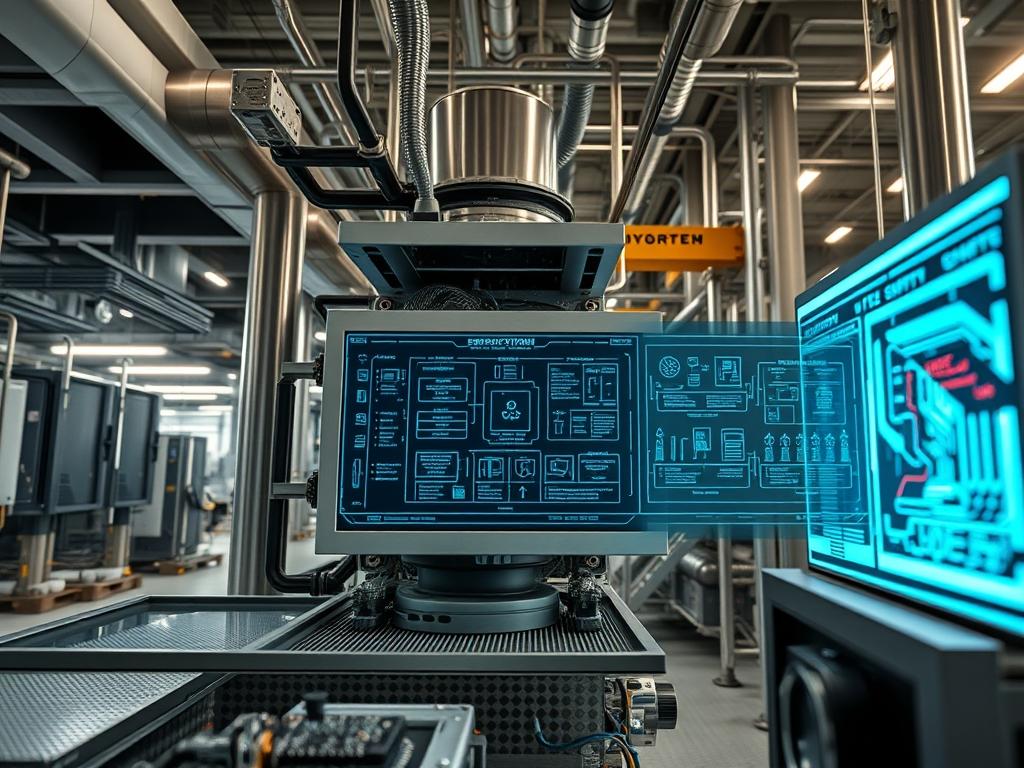
Vibration Isolator Selection is the definitive process of decoupling mechanical energy from sensitive structural substrates. In the context of modern technical stacks; specifically high-density data centers, power generation facilities, and precision laboratory networks; structural noise represents a physical-layer latency that degrades hardware reliability. This is not merely a mechanical concern; it is a fundamental architectural … Read more

Safety Standards for Compressor Internal Pressure Relief Valves

Compressor Internal Pressure Relief

Compressor Internal Pressure Relief management represents the terminal fail-safe layer within high-pressure gas or refrigerant infrastructures. In the context of industrial energy and cooling stacks, the integrated relief valve serves as an autonomous mechanical gate designed to prevent catastrophic vessel failure. Unlike external relief valves that exhaust to the atmosphere or a recovery tank, the … Read more

Comparing Durability in Hermetic vs Semi-Hermetic Design

Hermetic vs Semi-Hermetic Design

Hermetic vs Semi-Hermetic Design represents the fundamental divergence in industrial compression and cooling infrastructure engineering. In a hermetic system; the motor and compressor are housed within a single, welded steel shell. This design prioritizes total containment and eliminates external leak paths; however, it sacrifices serviceability for a factory-sealed lifecycle. Conversely; a semi-hermetic design utilizes a … Read more

Ensuring Efficiency through Precise Suction Gas Superheat Logic

Suction Gas Superheat Logic

Suction Gas Superheat Logic serves as the critical regulatory layer within modern high-density thermal management systems; it is the mathematical and physical bridge between refrigerant phase-state management and compressor longevity. In the context of large-scale data center cooling or industrial process refrigeration, this logic functions as the primary guardrail against liquid slugging: a catastrophic failure … Read more

Managing Thermal Limits via Compressor Discharge Temperature Control

Compressor Discharge Temperature

Managing Compressor Discharge Temperature is a critical operation within the technical stack of modern liquid-cooling systems and industrial HVAC infrastructure. In high-density environments such as hyperscale data centers or petrochemical processing plants; the compressor acts as the heart of the thermal management cycle. Controlling the temperature at the point of discharge is not merely a … Read more

Implementing Failsafes for R290 Propane Compressor Safety

R290 Propane Compressor Safety

Implementing R290 Propane Compressor Safety within modern thermal management systems requires a multi-layered approach to hazard mitigation. R290, a high-purity propane, serves as a sustainable refrigerant with a Global Warming Potential (GWP) of nearly zero; however, its classification as an A3 highly flammable substance necessitates rigorous failsafe protocols. In the context of critical infrastructure such … Read more

Optimizing Hardware for R32 Refrigerant Compatibility

R32 Refrigerant Compatibility

Transitioning to R32 Refrigerant Compatibility represents a critical architectural shift in modern climate control and thermal management systems within the Energy and Building Management Systems (BMS) stack. R32, a difluoromethane compound, serves as a high-efficiency replacement for R410A; however, its classification as an A2L mildly flammable refrigerant necessitates a rigorous hardware optimization strategy. The problem-solution … Read more

Engineering Challenges in CO2 Transcritical Compression Systems

CO2 Transcritical Compression

CO2 (R744) transcritical compression systems represent a fundamental shift in industrial thermal management and sustainable infrastructure. Within the broader technical stack of energy and data center cooling; these systems function as the primary heat rejection layer. Unlike traditional subcritical cycles where the refrigerant remains below the critical point; transcritical operations occur at pressures exceeding 73.8 … Read more

Maintaining Purity through Oil Free Compressor Technology

Oil Free Compressor Technology

Oil Free Compressor Technology represents the critical pinnacle of air purity within modern industrial stacks. In sectors such as semiconductor fabrication, pharmaceutical synthesis; and high-end food processing, the presence of even trace hydrocarbon aerosols can result in catastrophic product degradation. While traditional oil-injected units rely on downstream filtration to sequester lubricants, they introduce a permanent … Read more