
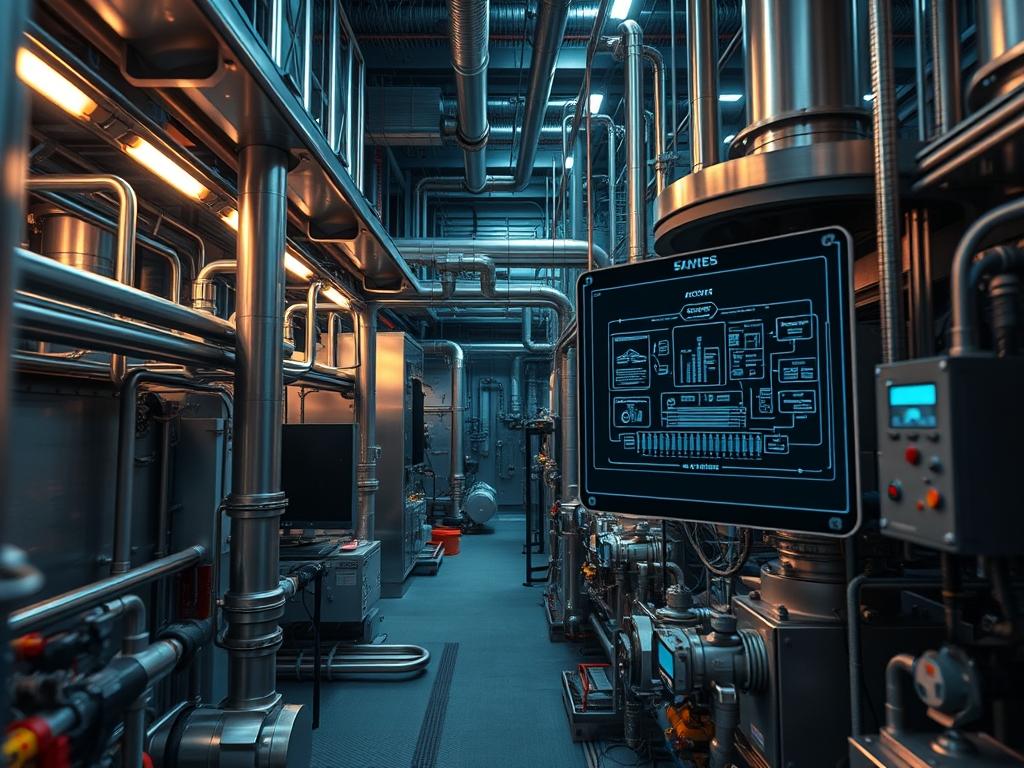
Ammonia Refrigeration Safety Protocols represent the core operational framework for high-capacity industrial cooling within the global energy and food-supply infrastructure. As a refrigerant, Ammonia (R717) provides superior thermal-inertia and zero global warming potential; however, its toxicity and flammability require a rigorous technical stack to manage the inherent risks of high-pressure liquid and gaseous phases. These protocols serve as the logical interface between mechanical systems and digital control layers, ensuring that the heavy thermal load processed by Screw Compressors and Evaporative Condensers remains within safe operating envelopes. From a systems perspective, the safety protocol is the critical encapsulation layer that prevents catastrophic failure should a mechanical seal or vessel integrity be compromised. By integrating real-time sensor data with hardware-level failsafes, engineers can mitigate the risks of high-concentration releases. This manual dictates the standardized configuration, execution, and troubleshooting procedures required to maintain system integrity under heavy concurrent load and extreme environmental variables.
Technical Specifications
| Requirement | Default Port / Operating Range | Protocol / Standard | Impact Level (1-10) | Recommended Resources |
| :— | :— | :— | :— | :— |
| NH3 Detection | 25 ppm (Warning) / 50 ppm (Alarm) | IIAR-2 / OSHA 1910.119 | 10 | ASTM A333 Low-Temp Steel |
| Control Network | Modbus TCP (Port 502) / BACnet | IEEE 802.3 Ethernet | 8 | CAT6 Shielded / 16GB RAM PLC |
| Relief Valve Set | 150 PSI – 300 PSI (Design Specific) | ASME Section VIII | 10 | Stainless Steel Trim |
| Discharge Temp | 160 F to 210 F | Thermodynamic Redlines | 7 | Mineral / Synthetic Oil |
| Sensor Latency | < 500ms Response Time | 4-20mA Analog Loop | 9 | 24V DC Dedicated Power |
THE CONFIGURATION PROTOCOL
Environment Prerequisites:
Implementation of Ammonia Refrigeration Safety Protocols requires strict adherence to institutional standards. All hardware must comply with IIAR-2 (International Institute of Ammonia Refrigeration) and ANSI/ASHRAE 15 specifications. Versions 2021 or later of the IIAR-6 inspection standard must be utilized for maintenance logs. User permissions for the digital logic controllers, such as an Allen-Bradley ControlLogix or Siemens S7-1500, must be restricted to “Super-User” or “Integrator” roles to prevent unauthorized changes to the setpoint logic or setpoint thresholds. Communication between sensors and the central processing unit must utilize shielded cabling to prevent signal-attenuation in high-interference mechanical rooms.
Section A: Implementation Logic:
The theoretical foundation of R717 safety rests on the principle of volumetric separation and pressure-differential management. The protocol is designed to be idempotent; sending a “System Shutdown” command must result in the same safe state regardless of the initial operational phase. By utilizing a high-side/low-side segregation logic, the system optimizes thermal-inertia while minimizing the total refrigerant payload at any single point of failure. The logic controller calculates the mass flow rate and compares it against expected throughput: if a deviation in the enthalpy-balance is detected, the system triggers an automated isolation. This “isolation-at-the-source” methodology reduces the overhead on emergency ventilation systems by containing leaks to localized zones, effectively treating the refrigeration cycle as a fragmented series of secure payloads rather than a singular high-risk entity.
Step-By-Step Execution
Step 1: Calibration of Electrochemical NH3 Sensors
Verify the accuracy of all Gas Detection Sensors using a known concentration of ammonia calibration gas. Technicians must interface with the sensor via a Fluke 789 ProcessMeter to ensure the 4-20mA current loop matches the actual PPM readout on the Head-End Display.
System Note: This action validates the analog-to-digital conversion layer. Accurate calibration ensures that the controller does not experience “noise-floor” false positives or, conversely, signal-attenuation that would delay a life-safety alarm.
Step 2: Validation of the Emergency Exhaust Subsystem
Execute a manual override via the PLC HMI (Human Machine Interface) to trigger the high-speed centrifugal fans. Use a Digital Anemometer to confirm that the airflow meets the required air changes per hour (ACH) mandated by the room volume calculation.
System Note: Forcing the output high tests the redundancy of the motor starter and the integrity of the mechanical linkages. This ensures the physical infrastructure can dump the heat and gas payload during a high-concentration event.
Step 3: King Valve and Solenoid Actuation Testing
Cycle all Electronic Expansion Valves (EEVs) and Suction Stop Solenoids to confirm 100 percent closure. Monitor the downstream pressure transducers for any “drift” which would indicate a seat failure or debris in the valve body.
System Note: This process verifies the “Isolation Logic” functionality at the physical hardware level. It ensures that the system can reach a “Zero Energy State” quickly, reducing the potential for significant fluid loss.
Step 4: Hydrostatic Relief Header Inspection
Visually inspect the Rupture Discs and Dual Relief Valve Assemblies. Ensure the three-way “man-way” valve is not positioned in a neutral state; it must be fully seated to one of the two relief paths to ensure any over-pressure event has a clear path to the atmospheric vent stack.
System Note: This provides a mechanical failsafe that operates independently of the digital logic. It protects the pressure vessels from reaching their burst-point if the digital control layer fails or encounters catastrophic power loss.
Section B: Dependency Fault-Lines:
Software conflicts between the SCADA system and the local PLC often arise due to mismatched polling rates. If the SCADA polling latency is too high, critical safety transients may be missed. Mechanical bottlenecks frequently occur at the Oil Separator level; if oil carryover occurs, the thermal-inertia of the evaporator decreases, causing the system to drive the Variable Frequency Drives (VFDs) to their maximum throughput. This over-exertion increases mechanical vibration, leading to fatigue in the ASTM A106 piping joints. Furthermore, non-condensable gases (air) in the system can create localized hot-spots, causing the logic-controllers to trigger high-discharge temperature trips without a genuine refrigerant leak being present.
THE TROUBLESHOOTING MATRIX
Section C: Logs & Debugging:
When diagnosing a system-stop, the first point of reference is the Alarm Historian located at /var/logs/refrigeration/safety_events.log or the dedicated PLC Diagnostic Buffer. Look for error codes such as E-044 (High Pressure Cutout) or E-112 (Gas Detector Communication Loss).
1. Digital Faults: If the HMI displays a “Sensor Communication Loss,” check the End-of-Line (EOL) Resistors on the RS-485 chain. High packet-loss in the communication bus usually suggests that the 24V DC power supply is sagging or that RFI (Radio Frequency Interference) is bleeding into the signal line from the compressor motors.
2. Mechanical Faults: A “High Discharge Temperature” alarm is often a symptom of low “Thermal-Inertia” caused by a fouled condenser coil. Use an Infrared Thermography Camera to scan the coil surface for even heat distribution.
3. Ghost Trips: Frequent intermittent alarms with no physical evidence of leaks often point to a “Floating Ground” in the sensor shielding. Ensure that the sensor shields are grounded at the controller end only to avoid ground loops.
OPTIMIZATION & HARDENING
Performance Tuning:
To maximize thermal efficiency, implement a Floating Suction Pressure strategy. This allows the PLC to adjust the suction setpoint based on the actual load requirements, reducing the concurrency of the compressors and lowering energy overhead. Utilize Sub-cooling Loops on the high-side to increase the net refrigeration effect per pound of ammonia circulated. This increases the total throughput of the system without increasing the mechanical footprint.
Security Hardening:
From a digital perspective, the refrigeration control network must be “Air-Gapped” or placed behind a robust Stateful Packet Inspection (SPI) Firewall. All Modbus traffic should be monitored for unusual write-requests to registers associated with safety setpoints. Physically, all manual valves must be clear-tagged and locked in their “Normally Open” or “Normally Closed” positions according to the P&ID (Piping and Instrumentation Diagram). Hardening the fail-safe logic involves “Watchdog Timers” in the PLC code: if the CPU hangs for more than 100ms, the systems are programmed to default to a “Closed/Safe” state.
Scaling Logic:
As the facility expands, the safety protocol must scale through “Modular Redundancy.” Rather than one massive central plant, utilize a “Distributed Satellite” architecture. This logic ensures that a failure in one evaporator branch does not impact the entire facility’s throughput. New nodes added to the system must use the same Encapsulation and Naming Conventions in the SCADA database to ensure seamless integration and consistent log analysis across the entire infrastructure.
THE ADMIN DESK
Q: How do I handle an idempotent alarm reset?
A: Ensure the underlying physical condition is resolved first. Navigate to the Safety Dashboard, clear the hardware latch on the physical relay, and then issue the Software Reset command. The system will stay in a “Safe-Hold” until both resets are validated.
Q: What indicates signal-attenuation in my NH3 sensors?
A: If the real-time PPM readout fluctuates wildly despite a stable environment, check the cable length and shield integrity. Signal-attenuation often occurs when cable runs exceed 500 feet without a dedicated 4-20mA signal booster or proper grounding.
Q: Why is “Thermal-Inertia” critical for safety?
A: Systems with high thermal-inertia react more slowly to ambient temperature spikes. This provides more “Headroom” for the control logic to respond to a pump failure before the pressure reaches the relief valve setpoint; preventing unnecessary atmospheric ammonia releases.
Q: How do I resolve high packet-loss on the Modbus network?
A: Inspect the Physical Layer for loose terminations. Ensure that the communication cables are not routed parallel to high-voltage power lines. If the issue persists, increase the “Retry Count” in the PLC communication parameters to compensate for the overhead.
Q: What is the risk of excessive oil carryover?
A: Oil acts as a thermal insulator in the evaporators, reducing the cooling throughput. This forces the compressors to run at higher speeds, increasing the mechanical vibration and the potential for a fatigue-related leak in the high-pressure discharge headers.