
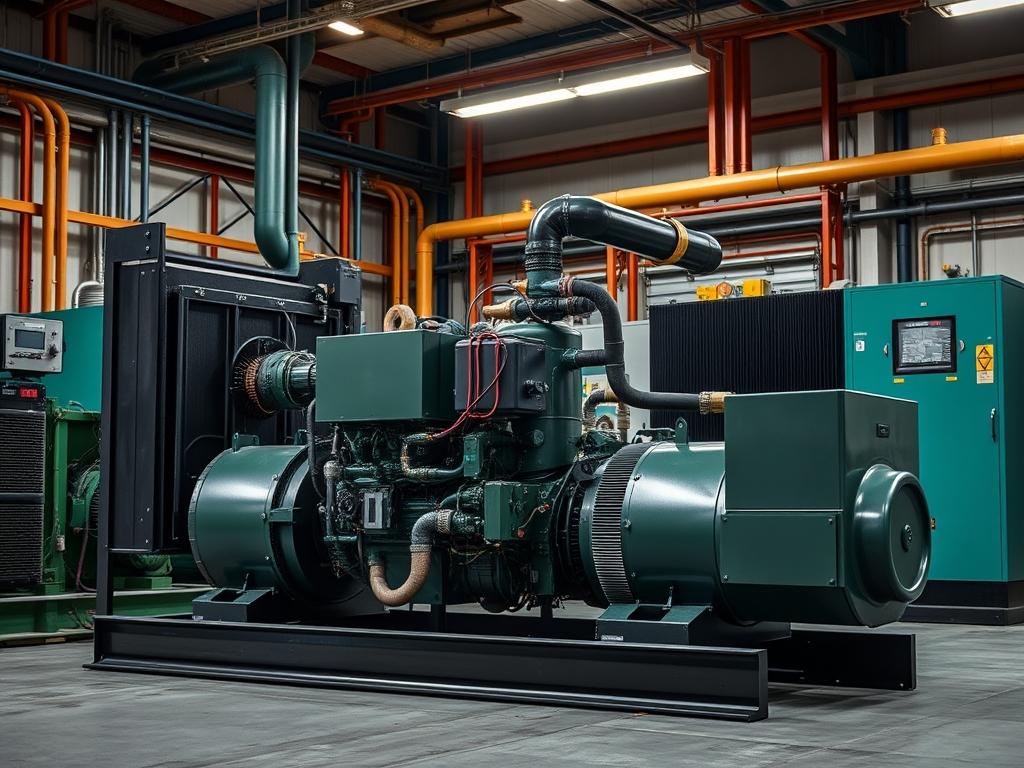
Inverter Driven Compressor Logic represents the apex of thermal load management within modern energy and industrial cooling architectures. Traditional fixed-speed compression systems rely on a binary state: they are either fully engaged or completely dormant. This approach introduces significant mechanical stress and energy waste through frequent start-stop cycles. In contrast, Inverter Driven Compressor Logic utilizes Variable Frequency Drives (VFDs) to modulate the rotational speed of the compressor motor in real time. By adjusting the electrical frequency supplied to the motor, the system aligns the refrigerant flow exactly with the instantaneous thermal demand. This granular control minimizes the “hunting” behavior of legacy systems; it reduces the overhead associated with inrush currents and ensures that the energy throughput is matched to the cooling payload. Within a larger infrastructure stack, this logic resides at the intersection of the physical layer (the compressor hardware) and the control layer (the Building Management System or Industrial Control System). Integrating these systems mitigates the high thermal-inertia of large-scale facilities and optimizes the overall energy yield by maintaining high volumetric efficiency across a broad operational envelope.
Technical Specifications
| Requirement | Default Port/Operating Range | Protocol/Standard | Impact Level (1-10) | Recommended Resources |
| :— | :— | :— | :— | :— |
| VFD Logic Controller | 30Hz to 120Hz | IEEE 519 / IEC 61800 | 9 | 1GB RAM / 1GHz ARM CPU |
| Telemetry Interface | Port 502 (Modbus TCP) | Modbus / BACnet IP | 7 | CAT6a Shielded Cable |
| Power Stage | 400V – 480V 3-Phase | NEMA Premium / IE3 | 10 | Grade 10.9 Fasteners |
| PID Loop Frequency | 100ms to 500ms Latency | Closed-Loop Control | 8 | Real-Time Kernel (RTOS) |
| Harmonic Filter | < 5 percent THD | IEEE 519 Standards | 6 | Passive or Active Reactor |
The Configuration Protocol
Environment Prerequisites:
Successful deployment requires strict adherence to electrical and digital standards. The environment must conform to NEC Article 430 for motor branch circuit protection and IEEE 519 for harmonic control. From a software perspective, the supervisory controller must run a Linux-based kernel (version 5.10 or higher) with the modbus-tools suite installed. User permissions must allow for the execution of sudo commands to modify system-level service files. Hardware prerequisites include a Fluke-1736 Power Logger for baseline energy auditing and a shielded twisted pair (STP) cable run for all RS-485 communication to prevent signal-attenuation from high-voltage EMI.
Section A: Implementation Logic:
The engineering design behind Inverter Driven Compressor Logic centers on the principle of Pulse Width Modulation (PWM). By converting incoming AC power to DC and then synthesizing a new AC waveform at varying frequencies, the inverter decouples the motor speed from the grid frequency. The goal is to maximize the Coefficient of Performance (COP) by operating the compressor at its most efficient speed for the current load. This reduces the thermal-inertia of the refrigerant loop; it prevents the rapid pressure spikes common in on/off systems. Furthermore, the implementation logic utilizes a Proportional-Integral-Derivative (PID) algorithm to calculate the error between the setpoint and the actual suction pressure. This logic is idempotent; given the same thermal load and environmental variables, the system will always return the same frequency output to ensure stability and predictability in the energy yield.
Step-By-Step Execution
1. Initialize the VFD Interface
Secure a serial connection between the logic controller and the Variable Frequency Drive (VFD). Use the command stty -F /dev/ttyUSB0 9600 cs8 -cstopb -parenb to configure the serial port parameters.
System Note: This action establishes the physical communication link at the hardware abstraction layer. It ensures that the serial buffer is configured to handle the Modbus RTU payload without packet-loss or framing errors.
2. Configure the Frequency Flour and Ceiling
Access the VFD internal register map and locate variables MIN_FREQ and MAX_FREQ. Set MIN_FREQ to 30Hz and MAX_FREQ to 90Hz using the modpoll utility or the VFD keypad.
System Note: Defining these boundaries prevents the compressor from operating in a low-frequency state where lubrication might fail; it also protects the motor windings from excessive heat generated by over-speeding beyond the mechanical design limits.
3. Establish the PID Control Loop
In the BMS/PLC configuration file, typically located at /etc/opt/hvac/control.conf, define the P_GAIN, I_TIME, and D_TIME variables. Execute systemctl restart hvac-control to apply the changes.
System Note: The PID loop calculates the necessary frequency adjustment based on real-time feedback. Refining these variables reduces latency in the system response; it ensures the compressor does not overshoot the target setpoint, which would lead to wasted energy and excessive cycling.
4. Enable High-Frequency Telemetry
Bind the local Modbus daemon to the network interface using the command ip addr add 192.168.1.50/24 dev eth0. Ensure that the modbus-gateway.service is active to allow the central cloud dashboard to poll register data.
System Note: This step facilitates the encapsulation of physical sensor data into TCP packets. High-frequency telemetry allows for the analysis of throughput and concurrency across multiple compressor units in a rack configuration.
5. Validate Harmonic Suppression
Monitor the electrical bus with a Fluke-multimeter while the inverter ramps from 30Hz to 60Hz. Verify that the Total Harmonic Distortion (THD) remains below the threshold specified in the IEEE 519 guidelines.
System Note: VFDs can introduce electrical noise into the local grid. This validation step ensures that the inverter logic does not interfere with other sensitive digital logic controllers on the same branch circuit.
Section B: Dependency Fault-Lines:
The most common bottleneck in Inverter Driven Compressor Logic is the relationship between motor frequency and oil recovery. If the logic maintains a low frequency for too long, the refrigerant velocity drops; this causes oil to trap in the evaporator, leading to mechanical failure. Another fault-line is the resonance frequency. Every mechanical assembly has a specific Hertz value where vibrations are amplified. These “skip frequencies” must be programmed into the VFD logic to prevent structural damage. On the network side, high electromagnetic interference (EMI) from the inverter power cables often causes signal-attenuation in unshielded communication lines, leading to intermittent Modbus timeout errors.
THE TROUBLESHOOTING MATRIX
Section C: Logs & Debugging:
When the system detects an anomaly, it will trigger specific fault codes on the VFD or in the system logs. Use journalctl -u hvac-control.service -f to monitor real-time errors in the control logic. Common codes include:
– ERR_OVERCURRENT_01: Indicates the motor is drawing more current than the hardware limit. Check for mechanical seizure or a short in the motor windings.
– ERR_DB_OVERVOLTAGE: Occurs during rapid deceleration when the motor acts as a generator. Check the Braking Resistor and the Decel_Time parameter.
– ERR_COMM_TIMEOUT: Signal lost between the PLC and the VFD. Inspect the RS-485 wiring and check for grounding loops.
Log files are typically stored in /var/log/hvac/telemetry.log. Analyze the timestamped entries to correlate frequency spikes with external ambient temperature changes. If the logs show a high rate of packet-loss, inspect the physical shielding of the data cables or reduce the Modbus polling frequency to lower the network overhead.
OPTIMIZATION & HARDENING
– Performance Tuning: To optimize energy yield, implement a “Floating Suction Pressure” algorithm. This logic dynamically adjusts the pressure setpoint based on the highest-demand zone; it allows the inverter to operate at a lower average frequency, significantly increasing thermal efficiency and reducing mechanical wear. Tune the concurrency of the PID calculations to ensure that multiple compressors in a shared manifold do not fight for the same load.
– Security Hardening: Secure the control interface by disabling unused ports via iptables. Allow only the BMS IP address to communicate with Port 502. Ensure that physical access to the VFD keypad is restricted; use a password-protected lock-out on the software parameter set to prevent unauthorized changes to the MAX_FREQ variables.
– Scaling Logic: As the infrastructure expands, transition to a Lead-Lag rotation strategy. Use the logic controller to track the run-time of each inverter-driven unit. The system should automatically promote the compressor with the lowest total hours to the “Lead” position. This distributes the mechanical load evenly; it ensures that the entire system scales without creating a single point of failure in the cooling plant.
THE ADMIN DESK
How do I clear a hard lockout on the VFD?
Navigate to the FAULTS menu on the interface. Verify the underlying cause is resolved. Use the reset command or cycle the ENABLE signal to clear the latching logic. Check /var/log/hvac/faults.log for the final error trace.
Why is my compressor vibrating at 45Hz?
This indicates a mechanical resonance point. Navigate to the SKIP_FREQ parameters in the setup and define a 2Hz window centered on 45Hz. The inverter logic will now accelerate through this range without dwelling, preventing structural fatigue.
Can I run multiple compressors on one VFD?
It is not recommended. Each motor requires its own VFD for proper overload protection and frequency modulation. Running multiple motors on one drive removes the ability to manage individual thermal-inertia and compromises the safety of the electrical branch.
How often should I tune the PID variables?
PID tuning should be performed seasonally. Changes in ambient temperature and humidity alter the thermal load profile. Use the autotune function during a period of average load to minimize latency and prevent unnecessary frequency oscillations.
What is the impact of long cable runs on the VFD?
Long cables increase the capacitive load; this can lead to reflected wave voltage spikes at the motor terminals. Use a dV/dt filter for cable runs exceeding 50 feet to protect the motor insulation from premature degradation.