
Identifying Vulnerabilities through HVAC Operational Risk Audits

HVAC Operational Risk Audits

HVAC Operational Risk Audits represent the critical intersection between physical thermodynamics and digital control logic. In high density data centers or mission critical industrial sites; these audits are not merely maintenance checks; they are deep technical investigations into the vulnerabilities of the Building Management System (BMS) and the environmental stability of the facility. The audit … Read more

Ensuring Data Integrity with a HVAC Sensor Calibration Schedule

HVAC Sensor Calibration Schedule

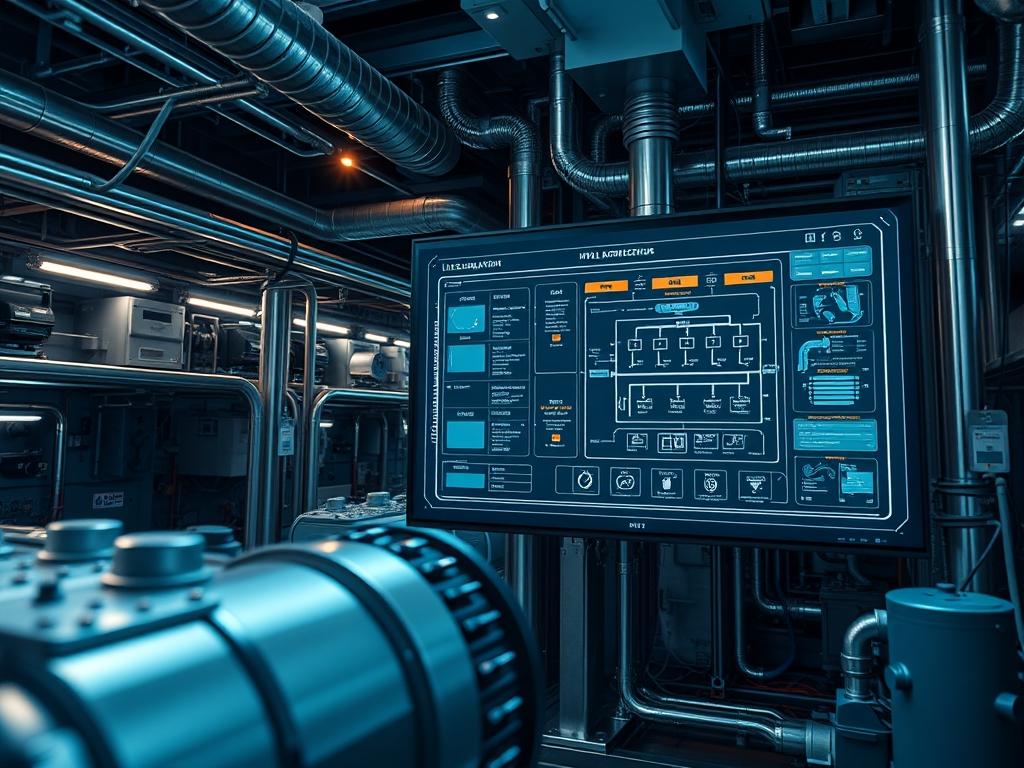
Maintaining an idempotent HVAC Sensor Calibration Schedule is a foundational requirement for any mission critical facility architecture. In high density data center environments or sensitive industrial manufacturing plants; the delta between reported sensor data and physical environmental reality can lead to critical failures. A rigorous calibration schedule prevents signal attenuation and sensor drift from compromising … Read more

Future Proofing Buildings via Smart Grid HVAC Interconnect

Smart Grid HVAC Interconnect

Smart Grid HVAC Interconnect represents the critical integration layer between a building’s thermal management system and the regional electrical utility’s automated demand response (ADR) network. In the modern technical stack, this interconnect resides at the intersection of energy infrastructure and cloud based building management systems (BMS). It functions as a Virtual End Node (VEN) that … Read more

Meeting Performance Specs for HVAC Communication Latency

HVAC Communication Latency

Automated climate control systems rely on real-time data exchange between sensors, controllers, and actuators to maintain precise environmental conditions. HVAC Communication Latency refers to the total time elapsed from the physical detection of a thermal change to the final execution of a mechanical response. In complex mission-critical environments such as data centers or semiconductor cleanrooms, … Read more

Standardizing Field Data with HVAC Modbus Mapping Standards

HVAC Modbus Mapping Standards

HVAC Modbus Mapping Standards serve as the critical diagnostic and operational framework for translating raw machine telemetry into actionable intelligence within modern building management systems. In the context of industrial infrastructure; including energy grids, water treatment facilities, and large-scale data centers; these standards act as the primary bridge between the physical layer and the digital … Read more

Modeling Real World Flows with Digital Twin HVAC Infrastructure

Digital Twin HVAC Infrastructure

Digital Twin HVAC Infrastructure represents the technical convergence of high-fidelity physical modeling and real-time sensor integration. Traditional HVAC management relies on static setpoints; however, this approach fails to accommodate the dynamic thermal-inertia of modern high-density data centers or commercial complexes. By implementing a digital twin, architects create an idempotent representation of physical airflows, cooling loops, … Read more

Comparing Sites through HVAC Energy Performance Benchmarking

HVAC Energy Performance Benchmarking

HVAC Energy Performance Benchmarking serves as the critical diagnostic layer for comparing energy consumption profiles across diverse physical sites. This methodology transforms raw electrical and thermal data into actionable intelligence; it allows infrastructure auditors to identify inefficiencies that otherwise remain hidden within aggregate utility bills. In the context of a modern technical stack, benchmarking resides … Read more

Detecting Filter Clogs via HVAC Airflow Pressure Telemetry

HVAC Airflow Pressure Telemetry

HVAC Airflow Pressure Telemetry serves as the primary diagnostic layer for environmental control systems within mission critical facilities; such as data centers, pharmaceutical labs, and high density manufacturing plants. This telemetry involves the continuous monitoring of static and differential pressure across filtration media to ensure optimal volumetric flow rates and thermal stability. Within the broader … Read more

Improving Measurement Accuracy through IoT Sensor Fusion for HVAC

IoT Sensor Fusion for HVAC

IoT Sensor Fusion for HVAC represents a critical evolution in building automation systems; it transitions the infrastructure from reactive threshold monitoring to predictive, multi-variate environmental control. Standard HVAC deployments frequently suffer from localized sensor bias and thermal-inertia within massive air volumes. By integrating disparate data streams from temperature probes, humidity sensors, occupancy detectors, and CO2 … Read more

Integrating Service Logs with HVAC Maintenance Management Modules

HVAC Maintenance Management Modules

Integration of service logs into centralized HVAC Maintenance Management Modules is a critical architectural requirement for modern industrial facilities; particularly those operating within data centers, hospitals, and high-density semiconductor fabrication plants. These modules act as the primary interpretive layer between heterogeneous IoT sensors and top-level Building Management Systems (BMS). By ingesting raw telemetry and error … Read more