
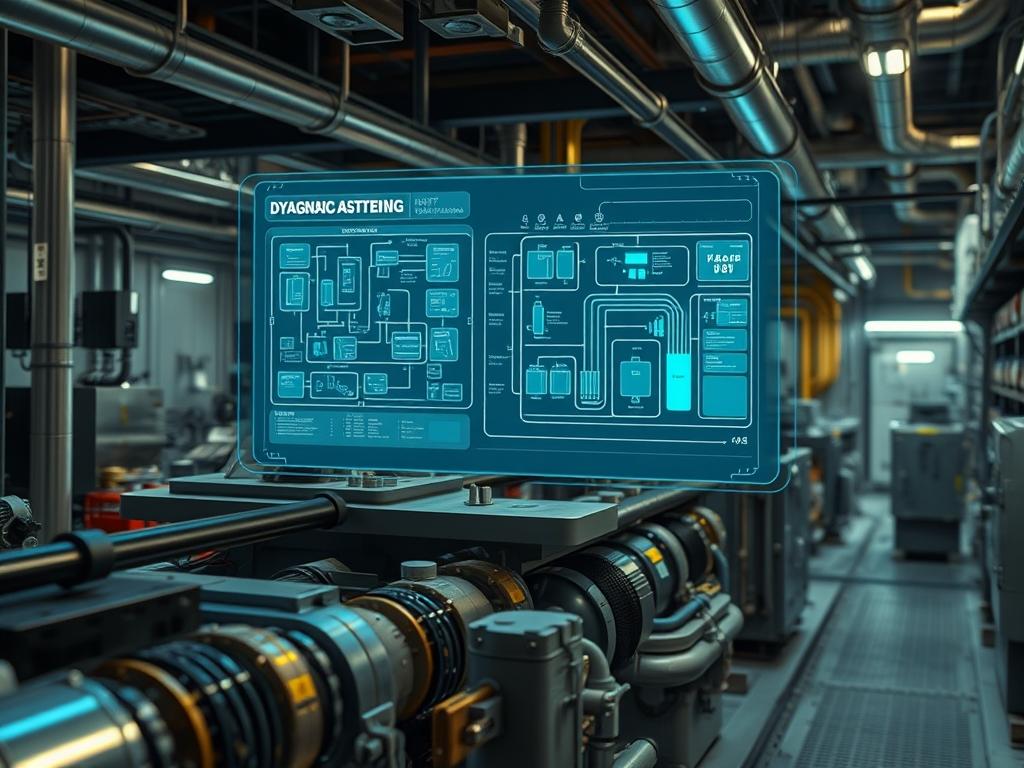
HVAC Load Shedding Automation serves as a critical layer within the Demand Response (DR) technical stack; it bridges the gap between utility-scale energy management and localized building automation systems. As grid volatility increases due to the integration of intermittent renewable sources, the ability to modulate large-scale cooling and heating loads becomes an essential tool for maintaining frequency stability. This manual addresses the integration of high-draw HVAC assets into a unified grid-support framework. By leveraging the thermal-inertia of commercial buildings, engineers can provide “firm” capacity to the grid operator without immediate degradation of occupant comfort. The automation logic described herein targets the reduction of peak demand at the transformer level, mitigating the need for expensive “peaker” plant activation. This process utilizes protocols like OpenADR 2.0b to synchronize site-wide power consumption with utility directives, creating a bi-directional communication path that ensures load reductions are verifiable, repeatable, and non-destructive to mechanical hardware.
TECHNICAL SPECIFICATIONS
| Requirement | Default Port/Range | Protocol/Standard | Impact Level | Recommended Resources |
|:— |:— |:— |:— |:— |
| Grid Signaling Interface | Port 443 (HTTPS) | OpenADR 2.0b | 10 | Dual-Core CPU / 4GB RAM |
| Local Fieldbus Control | Port 502 (Modbus) | Modbus/TCP or RTU | 9 | 512MB RAM / PLC Logic |
| Network Latency | < 150ms | IEEE 802.3 / 802.11 | 7 | 100Mbps Ethernet |
| Thermal Sensing | -40C to 125C | BACnet/IP (MSTP) | 6 | 12-bit ADC Resolution |
| Encryption/Security | TLS 1.2 or 1.3 | AES-256 | 8 | Hardware Security Module (HSM) |
| Contactor Durability | 1M Cycles | NEMA / IEC | 5 | Heavy Duty Relay (Silver Alloy) |
THE CONFIGURATION PROTOCOL
Environment Prerequisites:
Participating in high-density load shedding requires adherence to IEEE 2030.5 or OpenADR 2.0b standards for the Virtual End Node (VEN). The environment must include a centralized Building Management System (BMS) with local administrative access via SSH or a dedicated serial console. Required software includes python3-pip, libmodbus, and openssl. Hardware dependencies include a programmable logic controller (PLC) or an edge gateway capable of interpreting XML or JSON payloads from the utility’s Virtual Top Node (VTN). All electrical modifications must comply with NEC Article 700 for emergency systems and NEC Article 705 for interconnected power sources.
Section A: Implementation Logic:
The primary engineering objective of HVAC Load Shedding Automation is to treat the building’s internal volume as a thermal battery. When the grid signals a peak event, the system does not simply cut power; instead, it executes a sequenced setback of setpoints. This is an idempotent operation: repeated shed signals will not cause redundant mechanical cycling if the system is already at the target state. We focus on minimizing the payload size of control packets to ensure that latency does not interfere with the precision of the shed event. High throughput of telemetry data allows the audit trail to confirm that the thermal-inertia of the structure was sufficient to maintain interior temperatures within a 2-degree Celsius deadband during the event duration.
Step-By-Step Execution
1. Provisioning the Virtual End Node (VEN)
The first step is to install and configure the OpenADR client on the edge gateway. Use the command git clone https://github.com/avob/openadr-ven-client to pull the reference implementation. After installation, navigate to the /etc/openadr/ directory to modify the ven_config.yml file with the site-specific VEN_ID and the URL of the utility’s VTN.
SYSTEM NOTE: Initializing the VEN creates a persistent HTTPS tunnel. This action registers the local asset in the utility’s dispatch queue: adding the gateway to the kernel’s active routing table for secure energy-services encapsulation.
2. Establishing the Modbus Interface
Identify the register map for the VFD (Variable Frequency Drive) and the Chiller Plant. Use modpoll -m tcp -a 1 -r 40001 -c 10 [IP_ADDRESS] to verify that you can read the current frequency and power consumption. You must map the shed_participation flag to a specific Holding Register that the BMS monitors.
SYSTEM NOTE: This command triggers the libmodbus stack to poll local hardware. It validates that the physical link layer is active and that there is no significant signal-attenuation causing bit-errors in the register read.
3. Configuring the Global Setback Logic
Access the BMS logic engine (e.g., Niagara, ALC, or Schneider EcoStruxure) and create a new Global Shed Macro. This macro should increment the clg_setpt (Cooling Setpoint) by 4 degrees Fahrenheit across all VAV (Variable Air Volume) boxes. Ensure the logic includes a ramp-rate limit of 1 degree per 10 minutes to prevent surge current when the shed event concludes.
SYSTEM NOTE: Modifying the setpoint logic at the supervisor level forces the underlying PID loops to recalculate their output. This move reduces the VFD speed through the PWM controller: decreasing the aggregate amperage draw of the entire facility.
4. Implementing the Telemetry Feedback Loop
Configure a standard cron job or a system service to push energy consumption data (in kW) back to the VTN every 60 seconds. The command curl -X POST -H “Content-Type: application/xml” -d @telemetry_payload.xml https://vtn-endpoint.utility.com/api/telemetry is commonly used in automated scripts.
SYSTEM NOTE: The POST request verifies that the shed was successful. High packet-loss during this phase can result in financial penalties for non-compliance; therefore, ensure the cURL timeout is set to at least 30 seconds to handle network latency spikes.
5. Final Fail-Safe Verification
Check the hardware watchdog timer on the PLC or Gateway. Use the command sudo systemctl status hardware-watchdog to ensure the service is active. If the gateway loses communication with the VTN for more than 300 seconds, it must autonomously revert to the “Internal Control” profile.
SYSTEM NOTE: This provides a mechanical and software safety net. If the OpenADR service crashes, the watchdog will trigger a SIGTERM followed by a SIGKILL to restart the process: ensuring the facility does not remain in a “Shed” state indefinitely.
Section B: Dependency Fault-Lines:
The most frequent point of failure in HVAC Load Shedding Automation is the lack of concurrency between the BMS and the VEN. If the BMS is occupied with high-priority safety alarms (like smoke detection), it may ignore the shed command. Another bottleneck is mechanical wear; rapid cycling of Compressor Contactors can lead to “chatter,” which creates significant electrical noise. Ensure all shielded-twisted-pair (STP) cabling for RS-485 communication is grounded at only one end to prevent ground loops. In wireless deployments, signal-attenuation from thick mechanical room walls can lead to intermittent “Incomplete Event” reports.
THE TROUBLESHOOTING MATRIX
Section C: Logs & Debugging:
When a shed command is missed, analyze the logs at /var/log/openadr/ven_error.log. Look for the string “401 Unauthorized” which indicates a certificate expiration in the TLS handshake. If the logs show “Modbus Timeout,” use tcpdump -i eth0 port 502 to inspect the raw packets. If the payload appears garbled, check for electrical interference near the CAT6 cables. For physical troubleshooting, use a fluke-multimeter to measure the voltage on the 24VAC control transformer; a drop below 20VAC can cause the PLC to reboot during a shed event due to the localized voltage dip caused by large motor shutdowns.
OPTIMIZATION & HARDENING
– Performance Tuning: Adjust the polling-interval of the VEN to 15 seconds. This provides a balance between rapid response and low network overhead. Use multi-threading in your custom scripts to handle concurrency if you are managing more than 50 individual RTUs (Remote Terminal Units).
– Security Hardening: Move all grid-support hardware to a dedicated VLAN. Implement firewall rules on the gateway to drop all traffic except for ports 443 (outbound to utility) and 502 (inbound from local PLC). Change default credentials on all BACnet routers to prevent unauthorized setpoint overrides.
– Scaling Logic: As additional buildings are added to the grid-support portfolio, utilize an MQTT broker to aggregate “Shed-Ready” status from multiple sites. This reduces the overhead on the central VTN by sending a single heartbeat for a cluster of assets.
THE ADMIN DESK
Q: Why did my system ignore the Shed event?
Check the ScheduleOverride flag in the BMS. Most automation software prioritizes local schedules over external inputs. Ensure the VEN has “High” priority in the BACnet priority array (usually level 8 or 9).
Q: How do we prevent occupant complaints during shedding?
Utilize “Pre-Cooling” strategies. Drop the building temperature by 2 degrees two hours before a predicted peak. This maximizes the thermal-inertia and allows for longer compressor-off cycles without exceeding the comfort threshold.
Q: Can we shed power on older pneumatic systems?
Yes, by installing an E-to-P (Electronic to Pneumatic) transducer on the main branch line. A PLC can then signal the transducer to reduce branch pressure, effectively forcing the pneumatic dampers to a minimum-ventilation position.
Q: What is the risk of “Packet-Loss” during a grid crisis?
If the VTN cannot receive the “Shed-Confirmed” packet, the facility will be marked as non-compliant. Always implement a local log buffer that can re-sync historical consumption data once the network connection is restored.