
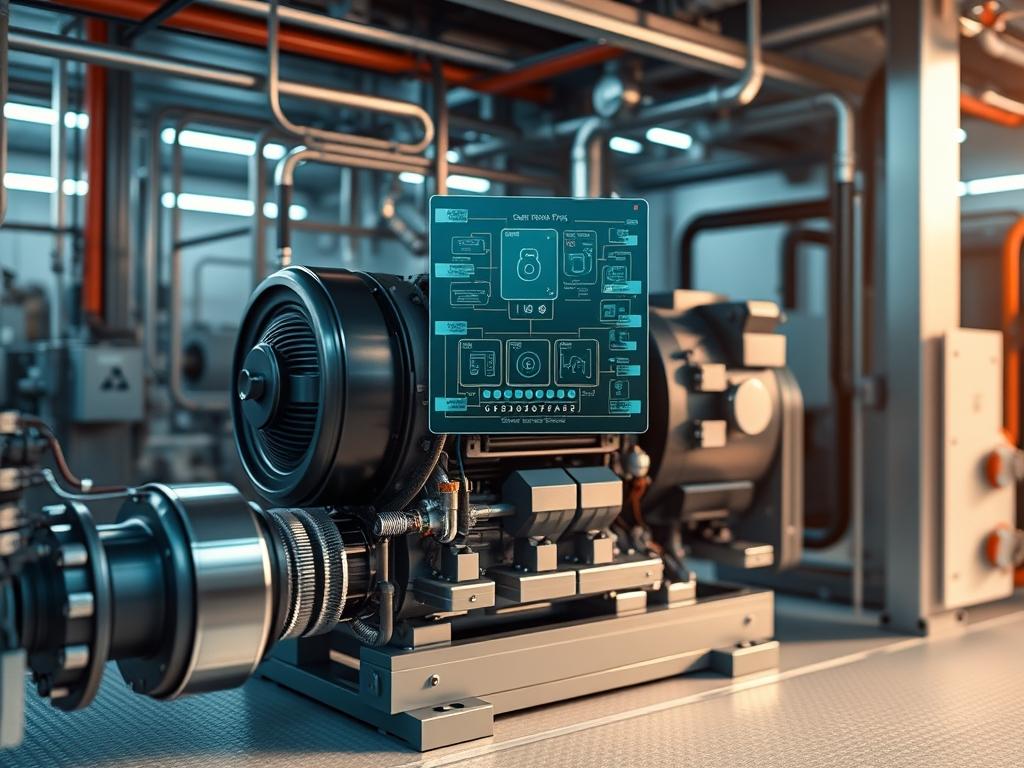
Managing the thermal integrity of a Heat Pump Compressor Crankcase represents a critical intersection between mechanical engineering and automated infrastructure management. Within the broader technical stack of high-density energy systems or modular data center cooling, the compressor serves as the primary mechanical driver for heat transfer. However, the system faces a significant physical vulnerability during the “OFF” cycle: refrigerant migration. When the compressor is inactive, the refrigerant naturally gravitates toward the coldest point in the system, which is frequently the oil-filled crankcase. This phenomenon results in the refrigerant condensing into a liquid and mixing with the lubrication oil, creating a low-viscosity mixture that compromises the mechanical stability of the unit. Upon subsequent activation, the sudden drop in pressure causes the refrigerant to flash into a gas, creating a foam that lacks the necessary lubrication properties. This leads to bearing wear, shortened lifespan, and catastrophic mechanical failure. A robust heating solution acts as a fail-safe, maintaining a higher temperature in the sump to ensure that the refrigerant remains in a gaseous state and resides within the accumulator rather than the pump block.
TECHNICAL SPECIFICATIONS
| Requirement | Default Port/Operating Range | Protocol/Standard | Impact Level (1-10) | Recommended Resources |
| :— | :— | :— | :— | :— |
| Voltage Input | 208V / 240V AC | NEC Article 440 | 9 | 20A Dedicated Circuit |
| Thermal Output | 40W – 70W | Constant Wattage | 8 | Aluminum/Silicone Band |
| Activation Delta | 20 degrees F above Ambient | IEEE 1015 | 7 | NTC Thermistor |
| Control Logic | NC/NO Relay Logic | Modbus / BACnet | 6 | PLC/MCU Logic Controller |
| Ingress Protection | IP65 or better | IEC 60529 | 10 | Polymer Encapsulation |
THE CONFIGURATION PROTOCOL
Environment Prerequisites:
Successful integration of a Heat Pump Compressor Crankcase heating element requires strict adherence to both physical and digital standards. The electrical installation must comply with NEC (National Electrical Code) Article 440, specifically regarding the sizing of branch-circuit conductors. From a software perspective, if the heating element is controlled via a building management system (BMS), the controller must support Modbus TCP or BACnet IP protocols for real-time monitoring. The technician must possess a fluke-multimeter for continuity and resistance verification, as well as a torque-wrench calibrated to inch-pounds to prevent the over-tightening of the heater band, which can lead to localized hotspots or damage to the high-pressure shell. Additionally, users must have administrative privileges on the logic-controllers to modify setpoints for the thermal-inertia calculations.
Section A: Implementation Logic:
The engineering design of a crankcase heater is based on the principle of vapor pressure differentials. By maintaining the oil temperature at a level significantly higher than the rest of the refrigeration circuit, the vapor pressure of the refrigerant within the oil is kept higher than the saturation pressure at the ambient temperature. This makes the heating process inherently idempotent; as long as the temperature differential is maintained, the state of the oil (free of liquid refrigerant) remains consistent regardless of the number of duty cycles. The control logic utilizes a thermal-inertia model to predict how long the compressor must remain at rest before the heater activates. This prevents unnecessary energy overhead while ensuring that the “payload” of heat is delivered exactly when the risk of migration begins. The heater must be interlocked with the compressor’s contactor so that it de-energizes during the “ON” cycle to maximize thermal efficiency and prevent the overheating of the lubricants.
STEP-BY-STEP EXECUTION
1. Mechanical Installation of the Heater Band
Secure the Heater Band around the lower circumference of the Heat Pump Compressor Crankcase. Ensure the band is positioned below the internal oil level to maximize heat transfer through the steel shell. Use a Torque Wrench to tighten the fastening bolt to exactly 20 inch-pounds.
System Note: This action establishes the physical interface for heat delivery; improper seating creates air gaps that lead to localized thermal spikes and eventual heater failure due to increased resistance and signal-attenuation in the feedback loop.
2. Wiring to the Control Contactor
Route the heater leads to the Normally Closed (NC) auxiliary contacts on the Compressor Contactor (C1). Connect the primary power source to the L1 and L2 terminals of the distribution block, ensuring that the heater circuit is protected by a dedicated Fuse Link.
System Note: By utilizing the NC auxiliary contacts, the system ensures an inverse-parallel operation; the heater is energized only when the compressor is idle. This logic reduces parasitic energy overhead and prevents thermal-inertia overlap during active cooling cycles.
3. Integration of the NTC Thermistor and Controller
Mount the NTC Thermistor to the compressor body using thermal paste and a zip-tie. Wire the sensor to the Analog Input (AI1) of the Microcontroller Unit (MCU) or PLC. In the control interface, use systemctl restart bms-monitor to initialize the polling service.
System Note: The sensor provides the real-time data needed to calculate the saturation point. High-quality sensors mitigate the risk of latency in the heating response, ensuring the compressor sump stays above the condensation threshold even during sudden ambient temperature drops.
4. Firmware Logic Deployment and Verification
Upload the control script to the Logic Controller. Ensure the code includes a 30-minute delay-on-break timer. Use the command tail -f /var/log/hvac_thermal.log to monitor the activation of the relay when the compressor stops.
System Note: The delay-on-break timer is crucial for managing the system’s concurrency; it prevents the heater from cycling on and off during short “OFF” periods, which preserves the life of the relay and maintains a stable thermal-inertia within the pump assembly.
Section B: Dependency Fault-Lines:
The primary failure point in Heat Pump Compressor Crankcase protection is the degradation of the heating element’s internal resistance wire. Over time, environmental moisture can penetrate the encapsulation, leading to increased leakage current and Ground Fault (GFCI) tripping. Another significant fault-line is the “stuck-closed” contactor failure; if the heater remains energized while the compressor is running, the lubricant reaching the top end of the scroll or piston can exceed its flash point, leading to carbonization. Finally, in networked environments, packet-loss in the communication between the ambient temperature sensor and the central controller can result in a “Default-OFF” state, leaving the compressor vulnerable to liquid slugging during a freeze event.
THE TROUBLESHOOTING MATRIX
Section C: Logs & Debugging:
When a thermal fault occurs, navigate to /var/log/syslog and filter for thermal-relay events. Look for the “E404: Sensor Not Found” or “E501: Thermal Delta Violation” strings. If the system reports a delta violation, use a fluke-multimeter to measure the resistance across the heater leads. A reading of “OL” (Open Loop) indicates a snapped element, while a reading significantly lower than the specified 400-600 ohms suggests a partial short within the coil.
Visual cues on the MCU status LEDs provide immediate feedback: a flashing red LED often indicates a signal-attenuation issue in the thermistor circuit, suggesting that the sensor wire is run too close to high-voltage lines, causing electromagnetic interference. In cases of intermittent failures, verify the idempotent nature of the firmware by triggering manual overrides via the Modbus interface and observing if the relay state consistently matches the command payload.
OPTIMIZATION & HARDENING
Performance tuning of the Heat Pump Compressor Crankcase involves the implementation of Pulse Width Modulation (PWM) for heat delivery. Rather than a binary “ON/OFF” state, a PWM-driven heater can vary the thermal throughput based on the exact temperature differential required. This reduces energy consumption by up to 30% and minimizes the thermal stress on the heater band. To increase the robustness of the physical setup, utilize high-temperature reflective insulation to wrap the heater band; this ensures the thermal payload is directed entirely into the crankcase rather than dissipating into the ambient air.
Security hardening focuses on the control layer. Ensure that the PLC or Logic Controller is behind a hardware firewall and that no default credentials exist for the BACnet interface. Implement a “Fail-on” logic for the heater: if the logic controller loses power or communication, the system should default to energizing the heater to protect the hardware, even at the cost of higher energy overhead. For scaling logic, in multi-compressor racks, stagger the start-up times of the heaters to prevent massive inrush current on the primary power bus, which can lead to voltage sags and subsequent packet-loss in the digital control network.
THE ADMIN DESK
How do I verify if the heater is functioning without disassembly?
Use an infrared thermometer to check the base of the Heat Pump Compressor Crankcase during the “OFF” cycle. It should be noticeably warmer than the top of the compressor. Alternatively, check the amp draw on the heater circuit using a clamp meter.
What is the ideal temperature setpoint for the heater?
The heater should maintain a temperature at least 20 degrees Fahrenheit (11 degrees Celsius) above the ambient air temperature. This ensures the vapor pressure remains high enough to prevent refrigerant migration into the oil.
Can I run the crankcase heater while the compressor is running?
It is technically possible but highly inefficient and potentially damaging. Heating the compressor during operation increases the discharge temperature, which can break down the oil. Use an auxiliary contact to ensure the heater only runs when the compressor is idle.
Why does my GFCI breaker keep tripping on the heater circuit?
This usually indicates a breach in the encapsulation of the heater band. Moisture has likely entered the heating element, causing a current leak to the ground. Replace the heater band to maintain system integrity.
How does thermal-inertia affect my start-up time?
In cold climates, the compressor must be heated for at least 8-12 hours before its first start of the season. This slow build-up of thermal-inertia ensures all liquid refrigerant has been driven out of the oil before mechanical rotation begins.