
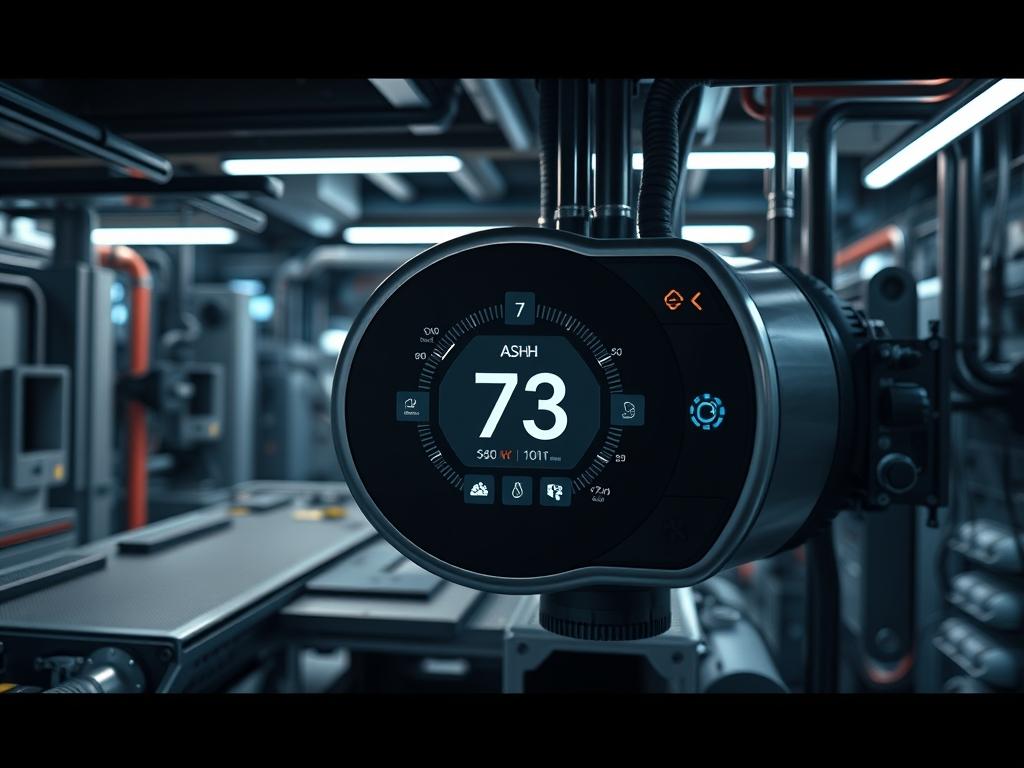
The integration of an ASHP Smart Thermostat Handshake within a modern energy grid necessitates a rigorous standardization of communication protocols to ensure interoperability between the physical heat pump inverter and the logical control layer. This handshake serves as the critical initialization sequence where the thermostat identifies the outdoor unit (ODU) capabilities, establishes secure parameters, and synchronizes the refrigerant cycle state with the user demand. Within the broader technical stack, this logic resides at the junction of the Internet of Things (IoT) network infrastructure and the physical HVAC mechanical plant. The primary challenge in this environment is the reconciliation of low-latency digital signals with the high thermal-inertia inherent in Air Source Heat Pump systems. Without a standardized handshake, the system risks frequent short-cycling, inefficient defrost cycles, and communication timeouts. By implementing a uniform protocol, architects can reduce signal-attenuation across long RS-485 runs and ensure that every command issued is idempotent, preventing catastrophic state mismatches during power fluctuations or network jitter.
Technical Specifications (H3)
| Requirement | Default Port/Operating Range | Protocol/Standard | Impact Level (1-10) | Recommended Resources |
| :— | :— | :— | :— | :— |
| Physical Layer | 2-wire RS-485 / 2.4GHz Wi-Fi | TIA/EIA-485 or 802.11ax | 10 | 120-ohm Termination Resistor |
| Communication Port | Port 502 (Modbus) / 8883 (MQTT) | TCP/IP or RTU | 8 | 512MB RAM Gateway |
| Data Encoding | Big-Endian / JSON Payload | IEEE 754 Floating Point | 7 | ARM Cortex-M4 MCU |
| Handshake Timeout | 500ms to 2000ms | Proprietary / Matter | 9 | High-speed Opto-isolators |
| Logic Voltage | 3.3V to 24V AC/DC | Class 2 Circuitry | 9 | Solid State Relays (SSR) |
THE CONFIGURATION PROTOCOL (H3)
Environment Prerequisites:
Before initiating the ASHP Smart Thermostat Handshake, the environment must meet the following baseline requirements:
1. All firmware for the Heat Pump Control Board and the Smart Thermostat must be updated to the latest stable release supporting the Matter or OpenTherm standard.
2. The physical wiring must utilize shielded twisted pair (STP) for wired connections to mitigate electromagnetic interference (EMI) from the compressor inverter.
3. Access to the local network gateway with sudo or administrative privileges for port forwarding and firewall configuration.
4. A calibrated fluke-multimeter for verifying line voltage stability at the R and C terminals.
Section A: Implementation Logic:
The engineering design of the ASHP Smart Thermostat Handshake relies on a state-machine architecture that prioritizes safety over speed. Because heat pumps involve high-pressure refrigerant cycles, the handshake must verify the specific compressor envelope before allowing the thermostat to take control. This involves an encapsulation process where the thermostat sends a capability-request packet. The ODU responds with its modulation range and defrost parameters. This exchange ensures that the thermostat does not demand a BTU output that exceeds the current physical capacity of the system, such as during extreme ambient temperature drops where evaporation efficiency is compromised. By standardizing this logic, we minimize the computational overhead on the local microcontroller while maximizing the throughput of real-time telemetry data.
Step-By-Step Execution (H3)
1. Physical Interface Verification
Connect the fluke-multimeter to the D+ and D- lines of the communication bus. A baseline voltage between 2.0V and 4.5V is expected.
System Note: This action ensures that the physical media supports the required signal-to-noise ratio. High resistance here leads to signal-attenuation, causing the ASHP Smart Thermostat Handshake to fail at the hardware level before logic is ever processed.
2. Baud Rate and Parity Alignment
Access the system serial interface using minicom or a similar terminal emulator. Set the baud rate to 9600 or 19200 with Even parity and 1 stop bit, as per the ASHP manufacturer specifications.
System Note: This step synchronizes the clock cycles of the thermostat and the heat pump controller. Mismatched timing parameters result in frame errors and corrupted data payloads within the serial buffer.
3. Service Daemon Initialization
On the edge gateway, execute systemctl start ashp-bridge.service to begin the polling sequence. Use journalctl -u ashp-bridge -f to monitor the live handshake logs.
System Note: This command launches the background process responsible for managing the concurrency of data requests. The daemon handles the encapsulation of Modbus registers into JSON objects for upward cloud reporting.
4. Logic Controller Registry Mapping
Map the thermostat’s internal demand variables to the ASHP address space using the chmod 664 /etc/ashp/register_map.conf command to ensure the mapping file is readable. Define the Target_Flow_Temperature and Compressor_Frequency registers.
System Note: Precise mapping allows the thermostat to exert idempotent control over the inverter. It ensures that a set-point change of 1 degree Celsius results in a predictable change in the compressor’s operational frequency.
5. Handshake Authentication and Validation
Issue a POST request to the internal API endpoint /api/v1/handshake/initiate with the device’s unique MAC address in the payload.
System Note: This triggers the final logic gate of the ASHP Smart Thermostat Handshake. The system validates the device ID against an authorized whitelist, preventing unauthorized third-party hardware from interfering with the thermal-inertia management of the building.
Section B: Dependency Fault-Lines:
Software-level bottlenecks typically occur when the MQTT broker experiences high latency, causing the handshake to time out. From a mechanical perspective, the most common bottleneck is the startup delay of the ODU inverter. If the thermostat logic does not account for the physical “soft start” period of the compressor, it may interpret the lack of immediate heat as a communication failure. Furthermore, library conflicts in the Python environment, specifically between pyserial and asyncio, can lead to race conditions where the handshake is attempted before the serial port is fully initialized by the kernel.
THE TROUBLESHOOTING MATRIX (H3)
Section C: Logs & Debugging:
When the ASHP Smart Thermostat Handshake fails, the first point of audit is the local log located at /var/log/ashp/handshake.log. Search for specific error strings such as ERR_TIMEOUT_RECL or ERR_CRC_MISMATCH.
– ERR_TIMEOUT_RECL: This indicates that the thermostat sent a capability request but received no response within the 2000ms window. Check the physical RS-485 termination; lack of a 120-ohm resistor often causes signal reflections that mask the response.
– ERR_CRC_MISMATCH: This points to packet-loss or interference. Verify that the communication wire is not routed parallel to high-voltage power lines.
– Visual Cues: Observe the LED status on the ODU control board. A rapid blinking amber light typically indicates a “Communication Error” state, correlating to a failure in the handshake’s capability exchange phase.
– Sensor Readout: If the handshake completes but the system behaves erratic, check the ambient_temp_sensor readout using sensors or a dedicated logic-controller interface. An incorrect thermistor reading will cause the handshake logic to calculate the wrong energy-efficiency curve.
OPTIMIZATION & HARDENING (H3)
Performance Tuning:
To improve throughput and reduce latency, implement a “Change-of-Value” (COV) polling strategy. Instead of constant 500ms intervals, configure the system to only transmit data when a sensor value shifts by more than 2 percent. This reduces the processing overhead on the MCU and clears the bus for critical safety signals.
Security Hardening:
All ASHP Smart Thermostat Handshake data should be encrypted at the transport layer using TLS 1.3 for Wi-Fi configurations. For wired RS-485, ensure the gateway is physically locked in a NEMA-rated enclosure. Implement firewall rules via iptables to restrict port 502 traffic to the known IP address of the thermostat, preventing unauthorized register writes.
Scaling Logic:
In multi-unit residential complexes, maintain a master-slave hierarchy where a central plant controller manages the ASHP Smart Thermostat Handshake for dozens of units. Use a load-balancer to distribute the API requests and ensure that the concurrency of handshakes does not saturate the local network’s switch fabric.
THE ADMIN DESK (H3)
Why does the handshake fail after a power outage?
Power cycles often reset the baud rate on the ODU to factory defaults. Ensure your startup script contains a command to re-initialize the ashp-bridge with the correct serial parameters before attempting the ASHP Smart Thermostat Handshake.
How do I reduce packet-loss on long cable runs?
Increase the wire gauge to 18 AWG and ensure the shield is grounded at only one end to prevent ground loops. This minimizes signal-attenuation and maintains the integrity of the data payload over distances exceeding 100 meters.
Can I bypass the handshake for manual testing?
Using a logic-controller, you can force the compressor into “Test Mode,” but this bypasses the safety limits established during the ASHP Smart Thermostat Handshake. This is only recommended for brief mechanical verification and avoids efficient thermal-inertia management.
What is the impact of thermal-inertia on comms?
High thermal-inertia means the compressor cannot react instantly to data. The handshake must include a “minimum-on-time” and “minimum-off-time” in its payload to prevent hardware damage from rapid state toggling between the thermostat and the heat pump.
How is the idempotent nature of commands verified?
By checking the Command_ID in the return packet. If the ODU receives the same Command_ID twice, it should recognize the redundancy and ignore the second packet, ensuring the system state remains consistent despite network retries.