
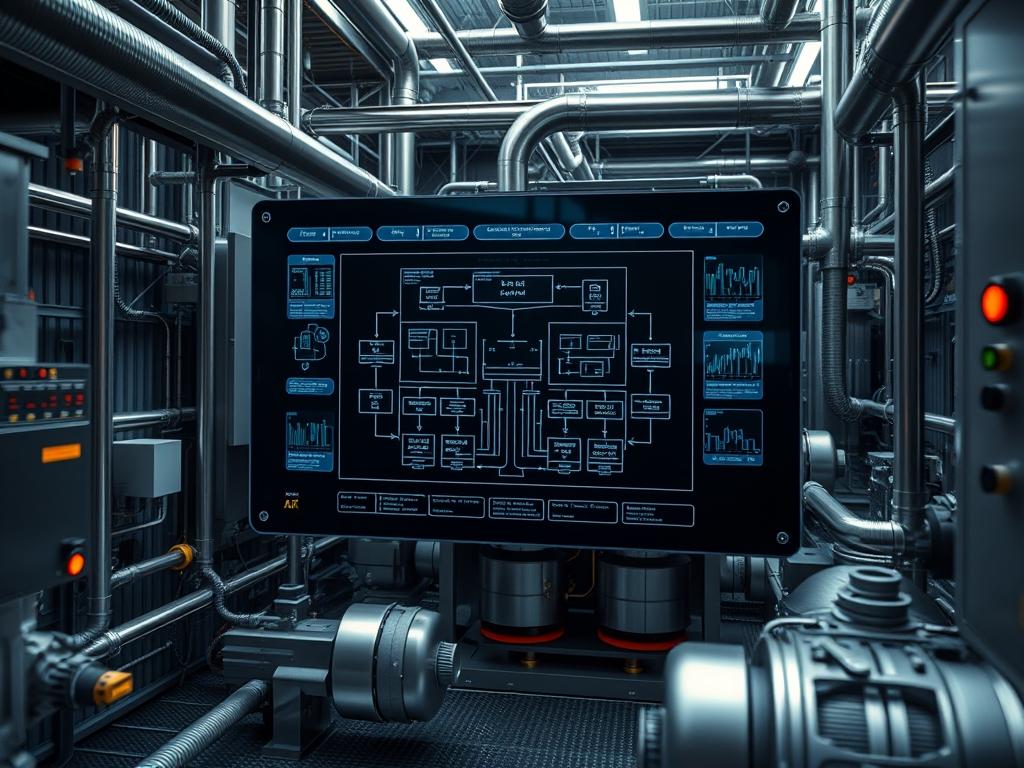
The Heat Pump Accumulator Function represents the primary defense mechanism against liquid migration in high-capacity vapor-compression cycles. In industrial energy stacks and complex network cooling infrastructures, the compressor functions as the core engine; however, its design inherently assumes the processing of compressible gases. The introduction of liquid refrigerant into the compressor cylinder constitutes a critical failure state known as slugging. The accumulator function mitigates this risk by providing a temporary storage reservoir on the suction side of the system. It ensures that only gaseous refrigerant enters the compressor while liquid remains trapped and metered back into the cycle at a controlled rate. This architecture effectively manages thermal-inertia fluctuations during defrost cycles or rapid load shifts. By implementing a standardized logical approach to accumulator management, systems architects can significantly reduce mechanical depreciation and prevent unplanned downtime in mission-critical environments. This protocol bridges the gap between mechanical fluid dynamics and digital logic control systems.
Technical Specifications
| Requirement | Default Port/Operating Range | Protocol/Standard | Impact Level (1-10) | Recommended Resources |
| :— | :— | :— | :— | :— |
| Suction Pressure | 1.5 bar to 5.0 bar | Modbus/TCP | 10 | 16-bit ADC Resolution |
| Temperature Delta | 5K to 15K Superheat | ISA-18.2 | 9 | Pt1000 RTD Sensors |
| Flow Velocity | 3.5 m/s (Minimum) | ASHRAE-15 | 8 | Schedule 40 Steel/K-Copper |
| Logic Controller | 24V DC / 100Mbit LAN | IEEE 802.3 | 7 | 1.2GHz ARM / 512MB RAM |
| Lubricant Return | 1% to 3% Oil-in-Gas | UL-1995 | 9 | ISO VG 32 POE Oil |
The Configuration Protocol
Environment Prerequisites:
Successful deployment of the Heat Pump Accumulator Function requires a high-fidelity sensor array and a robust industrial control kernel. The system must adhere to NEC Class 2 wiring standards for all signal cabling to prevent electromagnetic interference from the high-voltage compressor drive. Software-side dependencies include Python 3.8+ for edge-processing scripts or a dedicated PLC (Programmable Logic Controller) firmware capable of sub-100ms cycle times. Users must possess Administrative/Root privileges on the Building Management System (BMS) or local logic controller to modify expansion valve algorithms and suction pressure setpoints.
Section A: Implementation Logic:
The theoretical foundation of the Heat Pump Accumulator Function rests on the principle of phase separation via gravity and velocity reduction. When refrigerant enters the accumulator at a high velocity, the internal volume causes an immediate drop in speed. This drop allows gravity to pull liquid droplets to the bottom of the vessel, while the gaseous payload is drawn from the top through a U-tube or baffle system. The engineering “Why” involves protecting the internal valves and pistons of the compressor from the incompressible nature of liquids. From a control logic perspective, we monitor the superheat levels to ensure the accumulator is not “flooding.” If the suction line temperature approaches the saturation point, the logic must trigger an idempotent command to the Electronic Expansion Valve (EEV) to reduce flow, thereby maintaining the integrity of the vapor phase.
Step-By-Step Execution
1. Physical Component Validation and Mounting
Ensure the accumulator is mounted vertically in the suction line, as close to the compressor as possible. Verify that the internal “J-tube” orifice is clear of debris using a borescope. Use a fluke-multimeter to check the continuity of any integrated heater elements designed to boil off accumulated liquid during off-cycles.
System Note: Physical orientation dictates the effectiveness of gravity-based separation. Improper mounting restricts the oil-return orifice, leading to lubricant starvation in the compressor crankcase and eventual bearing seizure.
2. Sensor Integration and ADC Calibration
Map the temperature sensors (RTDs) and pressure transducers to the controller input modules. Configure the /etc/thermal-logic/io_map.conf file (or equivalent PLC tag list) to associate the suction inlet and outlet ports of the accumulator with the correct technical variables. Perform a zero-point calibration on the pressure transducers to ensure the signal-attenuation over long cable runs does not skew the saturation calculations.
System Note: The kernel uses these inputs to calculate real-time superheat. Inaccurate sensor data causes the logic to miscalculate the liquid-to-gas ratio, potentially bypassing the accumulator function’s safety triggers.
3. Logic Service Initialization via systemctl
Deploy the control script to the local controller. Enable the service to ensure it persists across reboots. Use the command systemctl enable hp_accumulator_logic.service followed by systemctl start hp_accumulator_logic.service. Monitor the initial startup sequence using journalctl -u hp_accumulator_logic.service -f to detect any immediate packet-loss or sensor communication timeouts.
System Note: Initializing the service at the OS level ensures that the safety logic is the first protocol to load after a power failure. This prevents the compressor from starting before the accumulator state has been verified as safe.
4. Expansion Valve (EEV) PID Tuning
Adjust the Proportional-Integral-Derivative (PID) constants to handle the latency of the refrigerant loop. Navigate to the controller tuning interface and set the Proportional Gain to 1.2 and the Integral Time to 60 seconds. Test the response by inducing a manual load shift and observing if the suction superheat remains within the 5K to 8K range.
System Note: Proper PID tuning prevents “hunting” in the valve. Rapid oscillation of the EEV causes liquid surges that can overwhelm the accumulator’s volume capacity, leading to liquid carryover into the compressor.
Section B: Dependency Fault-Lines:
Implementation failures often stem from mechanical bottlenecks or library conflicts in the control software. A common bottleneck is an undersized suction line, which increases gas velocity to a point where liquid droplets are carried into the compressor despite the presence of an accumulator. On the software side, conflicts between the Modbus-Serial and Modbus-TCP library versions can cause high latency in sensor readouts. If the control loop cannot poll the pressure transducer at least once every 500ms, the system may fail to react to a sudden liquid surge. Mechanical vibration is another fault-line; if the accumulator is not properly isolated, the vibration can cause fatigue cracks in the copper headers, leading to a total loss of refrigerant charge.
The Troubleshooting Matrix
Section C: Logs & Debugging:
When a fault occurs, the first point of reference is the system_fault.log located in /var/log/thermal_infrastructure/. Common error strings include “AL_LIQUID_LEVEL_HIGH” or “ERR_LOW_SUCTION_SUPERHEAT.” If the physical system shows frost on the compressor crankcase but the logs report nominal temperatures, verify the RTD placement.
Search for the following patterns in your diagnostic tools:
1. Error Code 0x04 (Sensor Mismatch): Indicates that the pressure and temperature readings are physically impossible (e.g., pressure says saturated but temperature is 50C). Check for failed transducers or corrupt wiring.
2. High Pressure Differential: If the pressure drop across the accumulator exceeds 0.15 bar, the internal screen is likely clogged with debris. This will be reflected in reduced throughput and higher compressor discharge temperatures.
3. Visual Cues: Heavy frost on the bottom 25% of the accumulator is normal during low-load operation; however, frost at the top outlet indicates that the vessel is full of liquid and a “slugging” event is imminent.
Optimization & Hardening
– Performance Tuning: To maximize thermal efficiency, implement a variable speed fan control for the evaporator. By synchronizing the concurrency of the fan speed with the compressor Hz, you can maintain a more stable suction pressure. This reduces the overhead on the accumulator by preventing drastic swings in the liquid-vapor ratio.
– Security Hardening: On the digital front, restrict access to the PLC via a dedicated VLAN. Implement firewall rules using iptables to only allow traffic on port 502 (Modbus) from known management IPs. Physically, ensure the accumulator is equipped with a high-pressure relief valve (PRV) rated for 150% of the maximum operating pressure to prevent explosion during a fire or runaway situation.
– Scaling Logic: As you add more compressors to the rack, use a “Header Accumulator” strategy. Instead of individual small units, move to a single large manifold accumulator. This increases the total payload volume and provides better liquid management across multiple stages of cooling. Ensure the logic is idempotent; an increase in the number of compressors should not change the fundamental safety checks of the accumulator function.
The Admin Desk
How do I verify the oil-return function?
Monitor the compressor oil sight glass during a steady state. If the oil level drops while the accumulator is cold, the oil-return orifice is likely blocked. You must reclaim the refrigerant and clean the internal orifice to prevent mechanical failure.
What is the ideal superheat at the accumulator outlet?
Target a range of 5K to 11K. Superheat lower than 5K risks “liquid carryover” during load changes. Superheat above 15K leads to excessive compressor discharge temperatures and premature lubricant breakdown.
Can the accumulator logic be bypassed in an emergency?
Bypassing the accumulator function is highly discouraged. Doing so exposes the compressor to immediate hydraulic shock. If emergency operation is necessary, manually throttle the expansion valve to 25% to ensure a purely gaseous flow at the cost of capacity.
How does thermal-inertia affect the accumulator?
Large accumulators act as thermal flywheels. They slow down the system’s response to ambient temperature changes. While this stabilizes the compressor, it may increase the latency of the cooling effect during initial startup or rapid demand spikes.
What does “idempotent control” mean in this context?
It means that sending the “Close Valve” command multiple times results in the same safe state without causing logic errors or hardware strain. This is critical during network instability where the controller might repeat packets to the expansion valve.